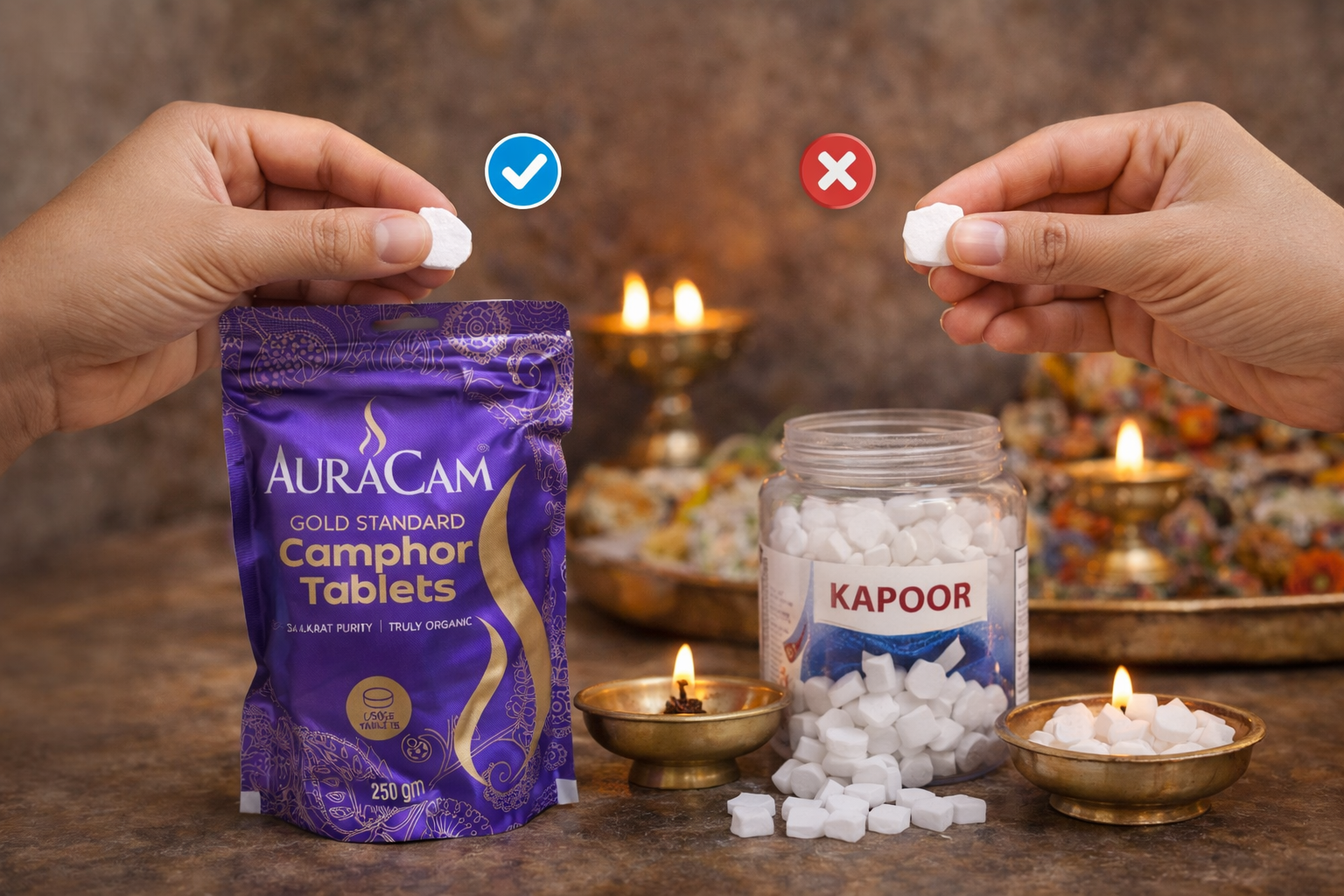
Not All Kapoor Is Created Equal
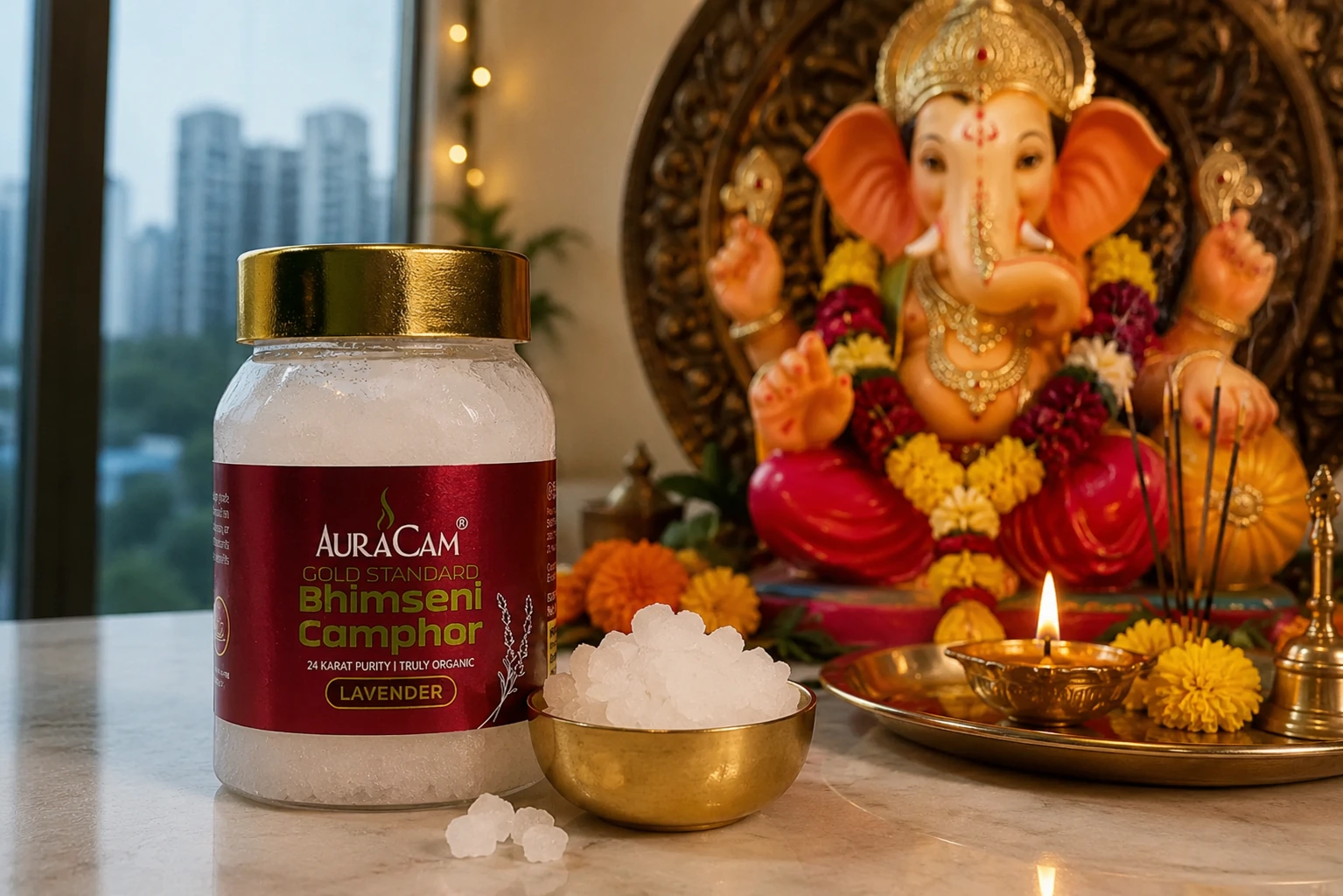
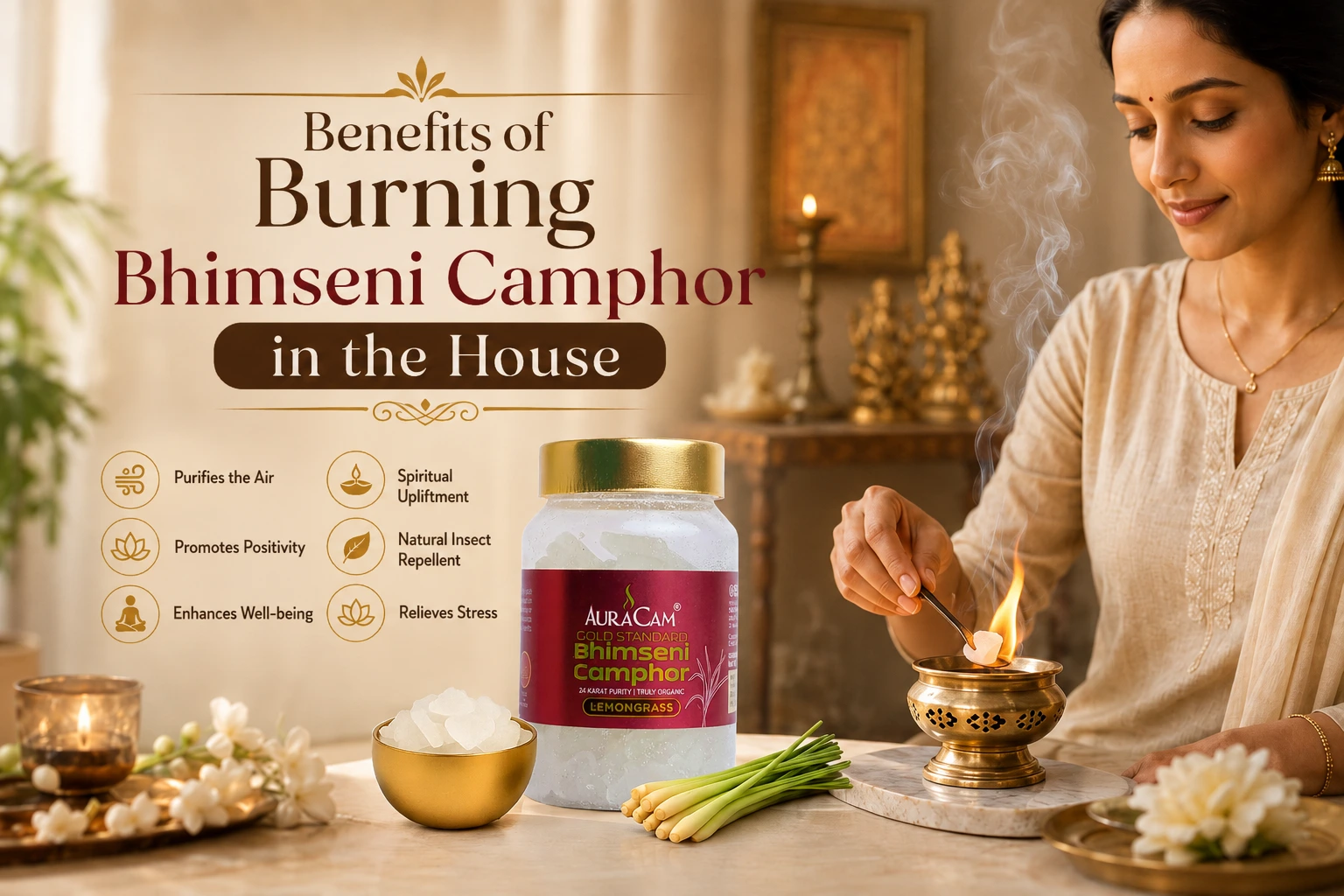
Bhimseni Camphor and the white tablets sold at your neighbourhood kirana store may look similar at first glance – but they are as different as clay from gold. For millions of Indian families, camphor is a daily ritual essential, lit at dawn for morning aarti, used in meditation corners, and burned during festivals like Diwali and Navratri. Yet very few consumers pause to ask: Is this camphor actually natural?
In 2026, that question is finally getting the attention it deserves. A rising wave of informed, health-conscious, and spiritually aware Indian consumers is driving a decisive shift toward authenticity – and that means a decisive shift toward genuine Bhimseni camphor.
This article breaks down exactly what separates Bhimseni camphor from regular synthetic kapoor – across purity, spiritual value, health safety, aroma, and environmental impact – so you can make the right choice for your home, temple, or wellness practice.
What exactly is Bhimseni Camphor?
Bhimseni Camphor is one of the oldest and most revered forms of natural camphor used in India. Derived from the resin of the Dryobalanops aromatica tree – native to the forests of Borneo and Sumatra – it is processed without synthetic chemicals to yield pure, translucent crystals with a rich, earthy, and distinctly sacred aroma.
The name “Bhimseni” traces back centuries in Indian trade history, used to distinguish this naturally derived camphor from cheaper imitations. In Sanskrit and Ayurvedic literature, this form of camphor is referred to as Bhima Karpura, signifying its superior potency and purity compared to other camphor varieties.
Bhimseni Camphor is also known by regional names across India:
- Kapur Bhimseni (Hindi-speaking states)
- Pachha Karpooram (Tamil Nadu and Andhra Pradesh)
- Nalla Karpooram (Kerala and Karnataka)
These regional names reflect how deeply embedded this specific variety of camphor is in India’s diverse ritual traditions – long before synthetic alternatives arrived.
What Is Regular Kapoor Made From?
Bhimseni Camphor is tree-derived and naturally processed – but regular camphor tells a very different story. The tablets and blocks of synthetic camphor dominating India’s mass market today are manufactured through a chemical process using turpentine oil, a byproduct of pine tree resin processing.
Through a series of chemical reactions – oxidation, hydrogenation, and crystallisation – turpentine is converted into a synthetic compound called camphor racemic, which mimics the molecular structure of natural camphor but lacks its full spectrum of aromatic compounds, therapeutic properties, and ritual purity.
Key facts about synthetic camphor in 2026:
- Over 75% of camphor sold in India’s unorganised retail segment is synthetic (FSSAI Industry Estimates, 2025)
- Most synthetic camphor tablets contain binders, stabilisers, and chemical additives to maintain shape and extend shelf life
- Synthetic camphor produces visible black smoke and soot residue due to incomplete combustion
- It is not recommended for direct skin application, inhalation therapy, or Ayurvedic use
According to Auracam’s 2026 India market insights, a significant number of consumers who believe they are using “pure camphor” for rituals are actually burning synthetic chemical compounds – a reality that is gradually coming to light as awareness spreads through digital platforms and wellness communities.
How Do Bhimseni Camphor and Regular Kapoor Compare Side by Side?
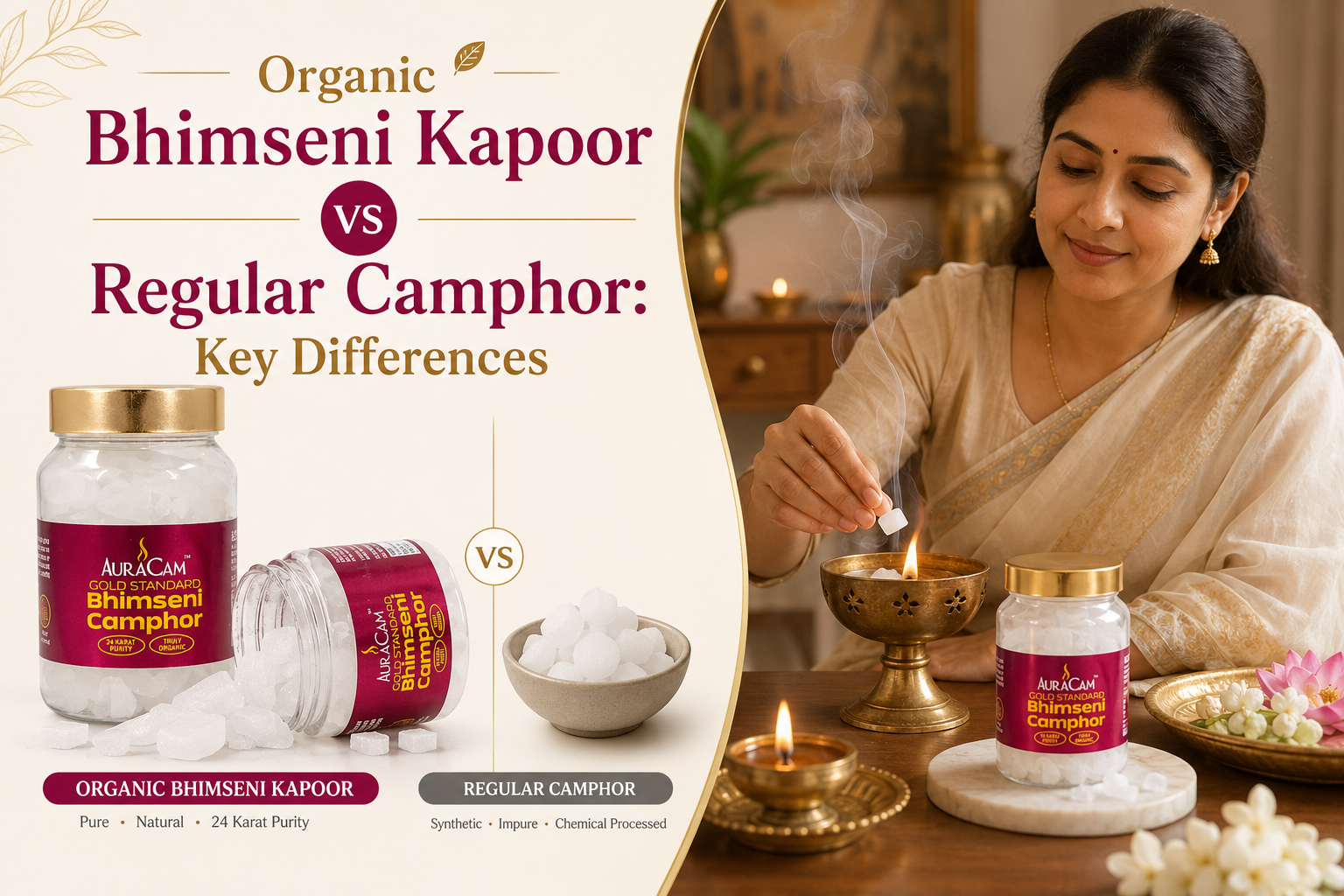
Bhimseni Camphor vs synthetic camphor is not just a matter of personal preference – it is a difference in fundamental product nature. Here is a detailed comparison across every dimension that matters to Indian consumers in 2026:
Purity and Composition
Feature | Bhimseni Camphor | Synthetic Camphor |
Source | Natural tree resin | Chemically derived from turpentine |
Purity level | 95–99%+ natural compounds | Synthetic racemic camphor with additives |
Chemical additives | None | Binders, stabilisers, fillers |
Recognised by Ayurveda | Yes | No |
Safe for skin/therapeutic use | Yes (when properly diluted) | Not recommended |
Aroma and Burn Quality
Bhimseni Camphor carries a fuller, warmer, and more complex fragrance profile. When lit, it burns slowly and cleanly, releasing a fragrant white smoke that dissipates quickly without leaving soot on brass diyas, silver thalis, or mandir walls.
Synthetic camphor, by contrast, burns faster, produces a sharper chemical scent, and frequently leaves black residue – a common complaint among temple administrators and households using mass-market camphor brands.
Spiritual and Ritual Value
Bhimseni Camphor is the only form of camphor explicitly referenced in Vedic texts and Ayurvedic scriptures for sacred use. Traditional priests and temple pujaris across India – particularly in South Indian temples following Agamic traditions – specify natural camphor for aarti, abhishek, and havan rituals.
The Charaka Samhita and Sushruta Samhita, foundational Ayurvedic texts, describe natural camphor’s role in ritual purification and its capacity to create a sattvic (pure, harmonious) atmosphere. Synthetic camphor has no such standing in traditional literature.
Health and Safety
Bhimseni Camphor in pure form is considered safe for use in well-ventilated spaces and has a long history of safe topical application in Ayurvedic medicine for joint relief, skin cooling, and respiratory ease.
Synthetic camphor, if inhaled in excess or used near children, can cause irritation of the mucous membranes and respiratory tract. The US National Library of Medicine’s toxicology database lists synthetic camphor as requiring caution for paediatric exposure – a concern relevant to Indian households where young children are regularly present during pooja.
Why Are Indian Consumers Choosing Bhimseni Camphor Over Synthetic in 2026?
Bhimseni Camphor is experiencing a clear and data-backed resurgence across India. Several converging trends are accelerating this shift.
The clean-label movement: Just as Indian consumers now scrutinise food labels for artificial additives, they are extending the same lens to pooja products. The demand for “pure,” “natural,” and “chemical-free” camphor has grown by an estimated 60–70% year-on-year across e-commerce platforms (RedSeer Digital Consumer Report, Q1 2026).
Wellness and aromatherapy mainstreaming: India’s wellness industry surpassed ₹1.5 lakh crore in 2025 (ASSOCHAM), and natural aromatic products are among its fastest-growing categories. Urban consumers in cities like Pune, Hyderabad, Chennai, and Ahmedabad are integrating Bhimseni camphor into meditation routines, yoga spaces, and home diffusers.
Temple procurement standards rising: Major temple trusts across Tamil Nadu, Karnataka, and Maharashtra are actively specifying natural camphor in their procurement tenders, citing both ritual authenticity and air quality concerns in enclosed shrine spaces.
Gifting culture evolving: Premium natural camphor in elegant, story-driven packaging has become a popular choice for Diwali, Navratri, and housewarming gift hampers – particularly in the ₹500–₹3,000 gifting range.
At Auracam, we craft each batch of Bhimseni camphor to meet these rising expectations – delivering purity-certified, lab-tested crystals to homes, temples, and retailers who refuse to compromise on what they burn at their altar.
What Are the Pricing Differences Between Bhimseni Camphor and Regular Kapoor?
Bhimseni Camphor does carry a premium over synthetic alternatives – and for good reason. Here is a realistic 2026 pricing comparison for the Indian market:
Synthetic Camphor (Mass Market)
- 50g tablet pack – ₹25–₹50
- 100g pouch – ₹45–₹80
- 500g bulk pack – ₹180–₹320
Bhimseni Camphor – Auracam Premium Range
- 25g crystal pouch – ₹55–₹75
- 50g premium box – ₹110–₹140
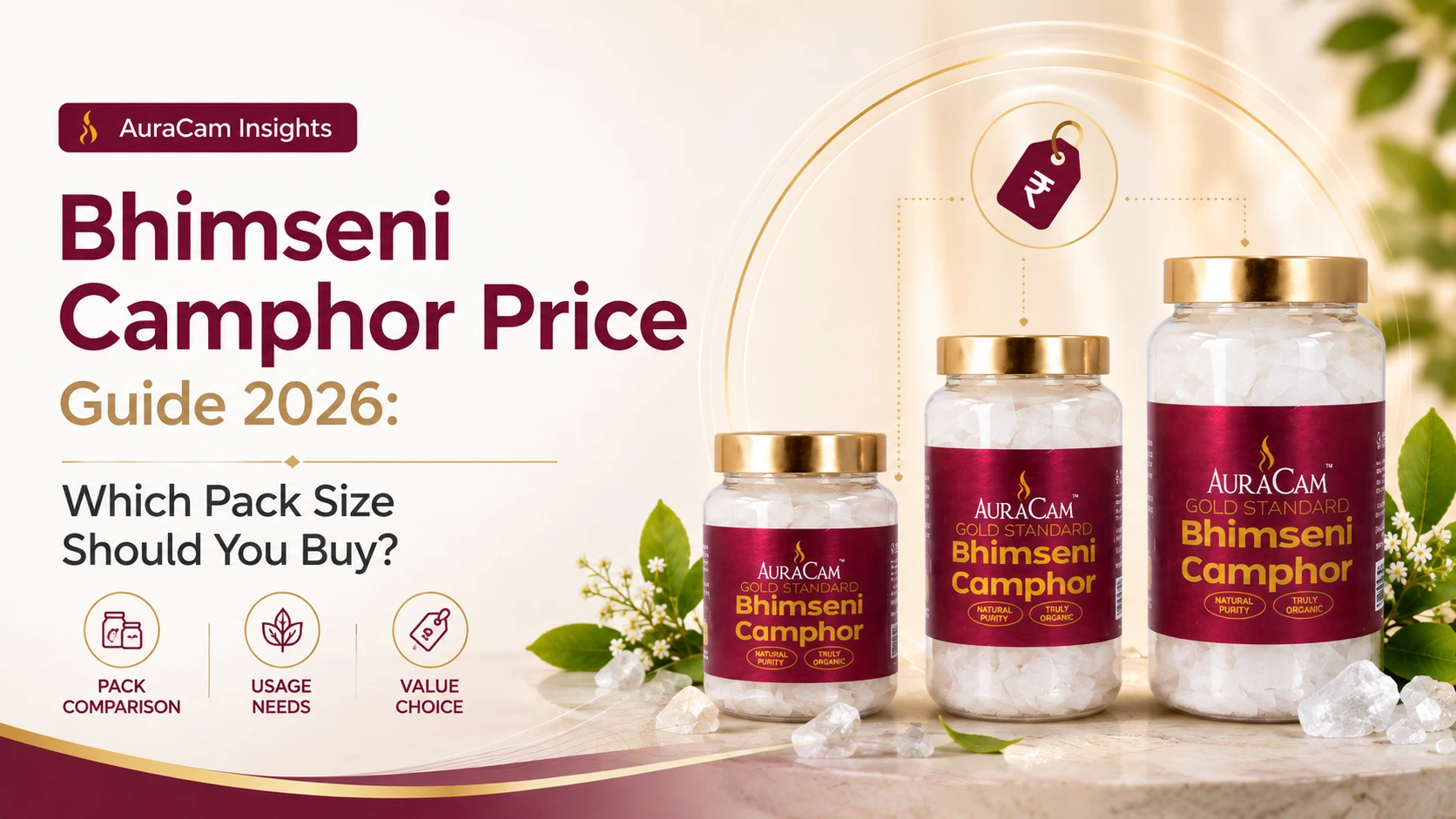
- 100g crystal jar – ₹200–₹260
- 250g family value pack – ₹450–₹540
- 1 kg institutional/temple bulk – ₹1,400–₹1,700
- 5 kg wholesale pack – ₹6,500–₹7,800
The price difference reflects the genuine cost of natural sourcing, rigorous purity testing, and responsible processing – not inflated brand margins. For consumers who burn camphor daily in their pooja, the additional ₹2–₹4 per use is a meaningful and worthwhile investment in quality, health, and spiritual authenticity.
How Does Auracam Ensure the Authenticity of Its Bhimseni Camphor?
Bhimseni Camphor’s value is entirely dependent on its purity – and in a market where adulteration is widespread, Auracam’s commitment to verified quality sets it apart.
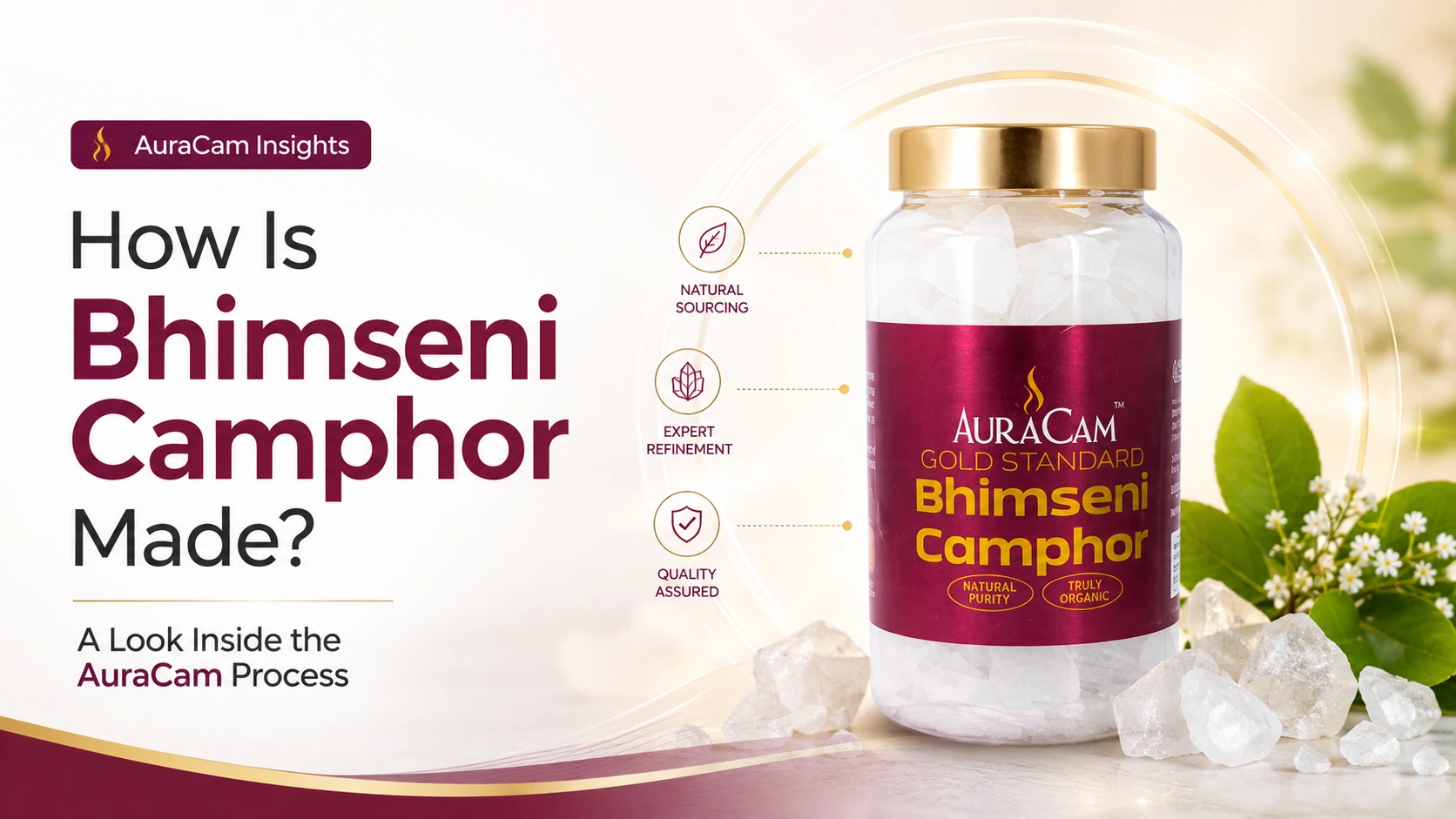
Auracam’s authentic Bhimseni camphor ensures every product that leaves our facility meets the following standards:
- Third-party lab purity testing – minimum 95% natural camphor content verified per batch
- QR-code authenticity verification – consumers can scan packaging to confirm product origin and purity certificate
- No synthetic binders or fillers – crystals are processed and packed without chemical additives
- Responsibly sourced resin – supply chain transparency from forest to shelf
- Recyclable and minimal-plastic packaging – aligned with India’s growing eco-conscious retail expectations
These are not marketing claims – they are verifiable commitments that reflect Auracam’s belief that trust is the only sustainable foundation for a brand in India’s premium natural products space.
Conclusion: Make the Switch to What Truly Belongs on Your Altar
Bhimseni Camphor is not simply a “better” version of regular kapoor. It is a fundamentally different product – natural where synthetic is chemical, sacred where adulterated is ordinary, and health-respecting where mass-market is indifferent.
As India’s ritual economy, wellness culture, and clean-living movement converge in 2026, the choice between Bhimseni camphor and synthetic kapoor is becoming less about price and more about values. What do you want burning on your altar, in your child’s presence, and in your home’s air?
The answer, for a growing number of discerning Indian consumers, is clear. And Auracam is proud to meet that clarity with camphor that is pure enough to honour every tradition it serves.
FAQ: Everything You Need to Know About Bhimseni Camphor
- What is the difference between Bhimseni camphor and edible camphor?
Bhimseni camphor is natural and safe for ritual and aromatherapy use, but it is not the same as food-grade edible camphor used in South Indian sweets like payasam. Edible camphor (pachai karpooram in Tamil) is a specific grade – always verify labelling before any culinary use. - How can I tell if camphor is genuine Bhimseni or synthetic?
Genuine Bhimseni camphor appears as slightly translucent, irregular-shaped white crystals with a rich, deep fragrance. It burns completely without leaving black soot. Synthetic camphor is often perfectly uniform in shape (tablet form), has a sharper chemical smell, and leaves residue. - Is Bhimseni camphor available online in India with home delivery?
Yes. Auracam offers premium Bhimseni camphor with pan-India delivery, available in multiple pack sizes from 25g retail pouches to 5 kg wholesale packs. - Can children be around burning Bhimseni camphor?
Natural Bhimseni camphor, burned in small quantities in a ventilated room, is far safer than synthetic camphor. However, as a general precaution, avoid burning any camphor in small, unventilated rooms with infants. - What is the shelf life of Bhimseni camphor crystals?
Stored in an airtight container away from heat, moisture, and direct sunlight, Bhimseni camphor retains full potency for 18–24 months. - Does Auracam offer bulk Bhimseni camphor for temples and retailers?
Yes. Auracam supplies institutional and wholesale packs from 1 kg (₹1,400–₹1,700) to 5 kg (₹6,500–₹7,800), with purity certificates and custom branding options for temple trusts and premium retailers.