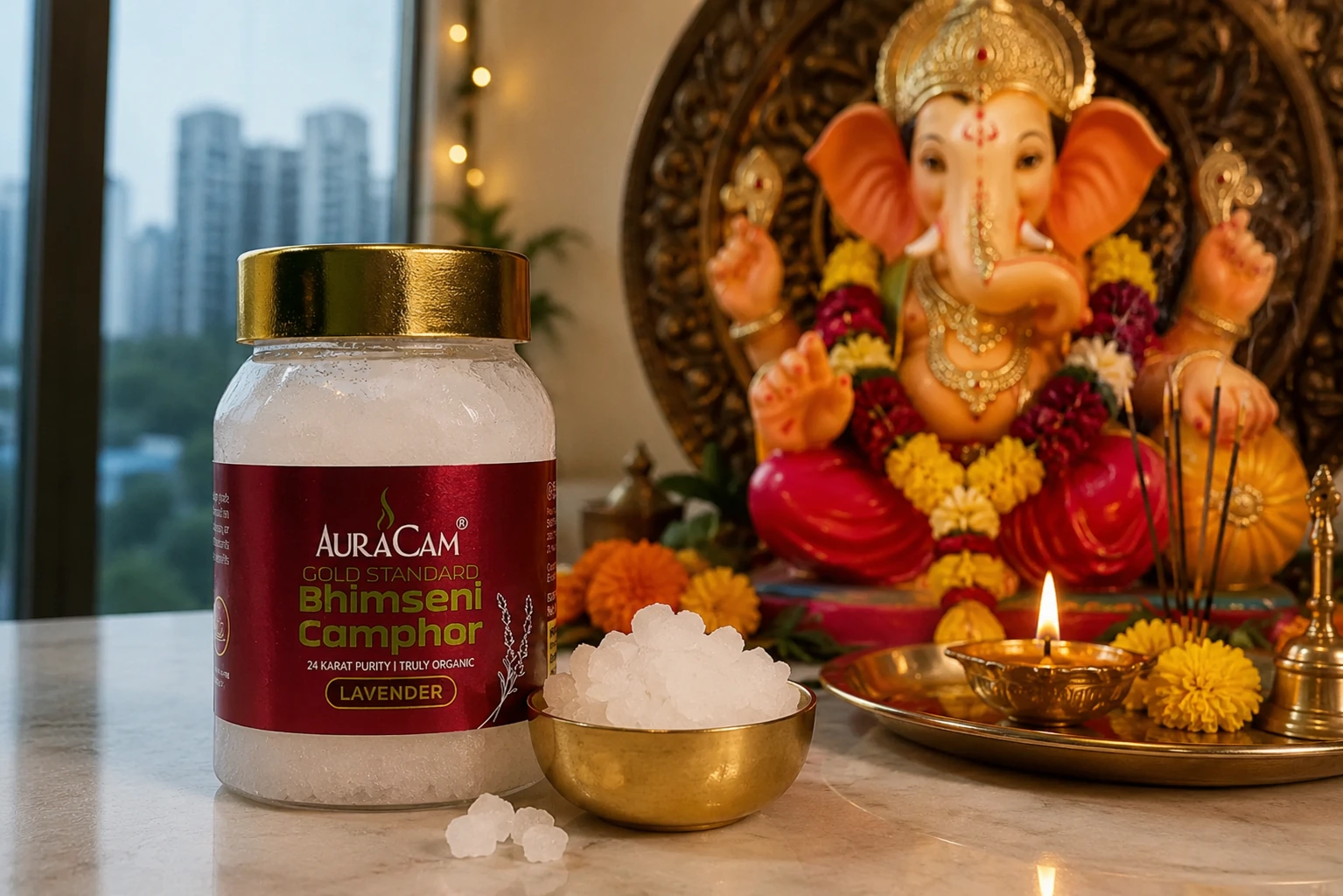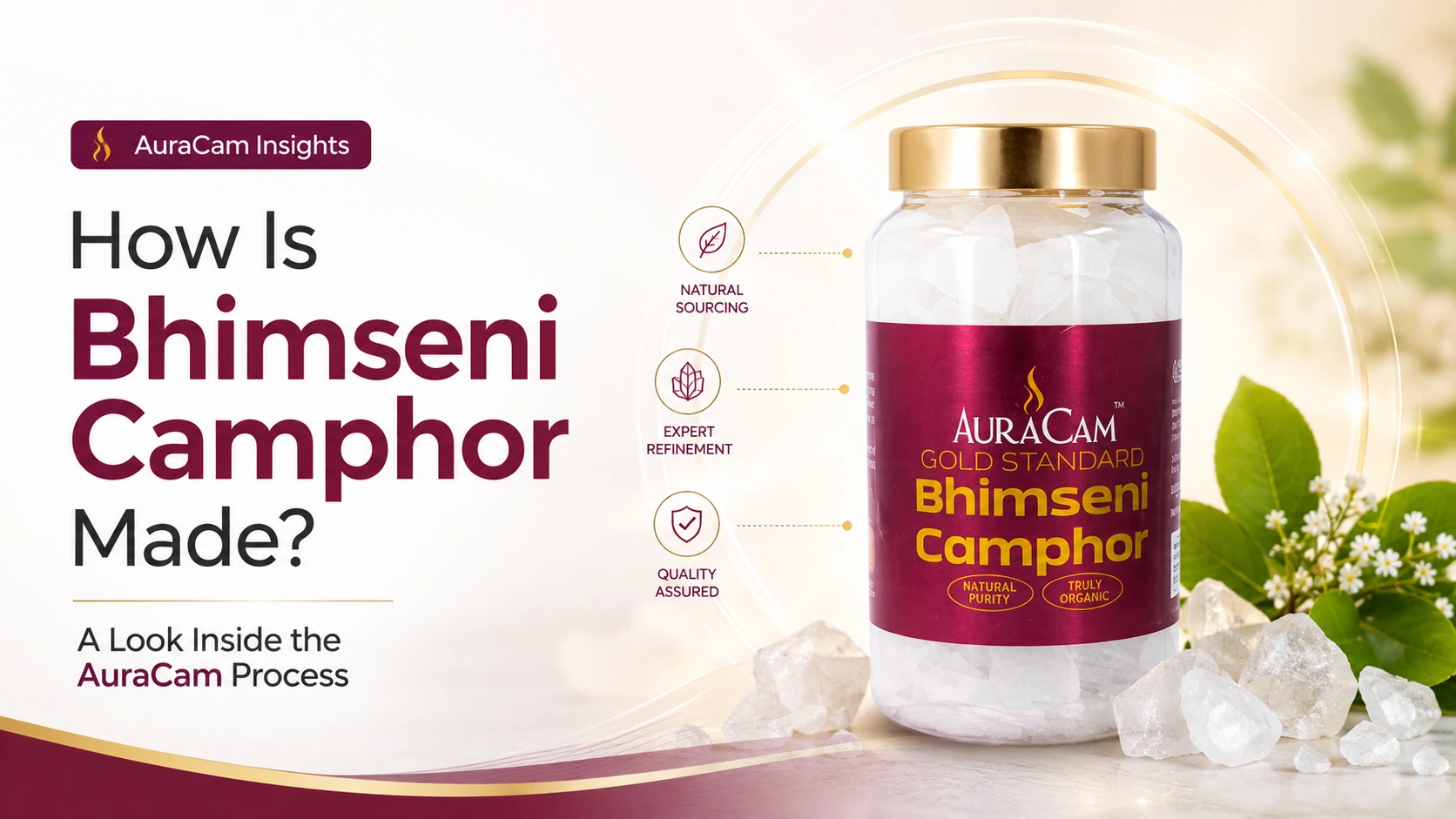
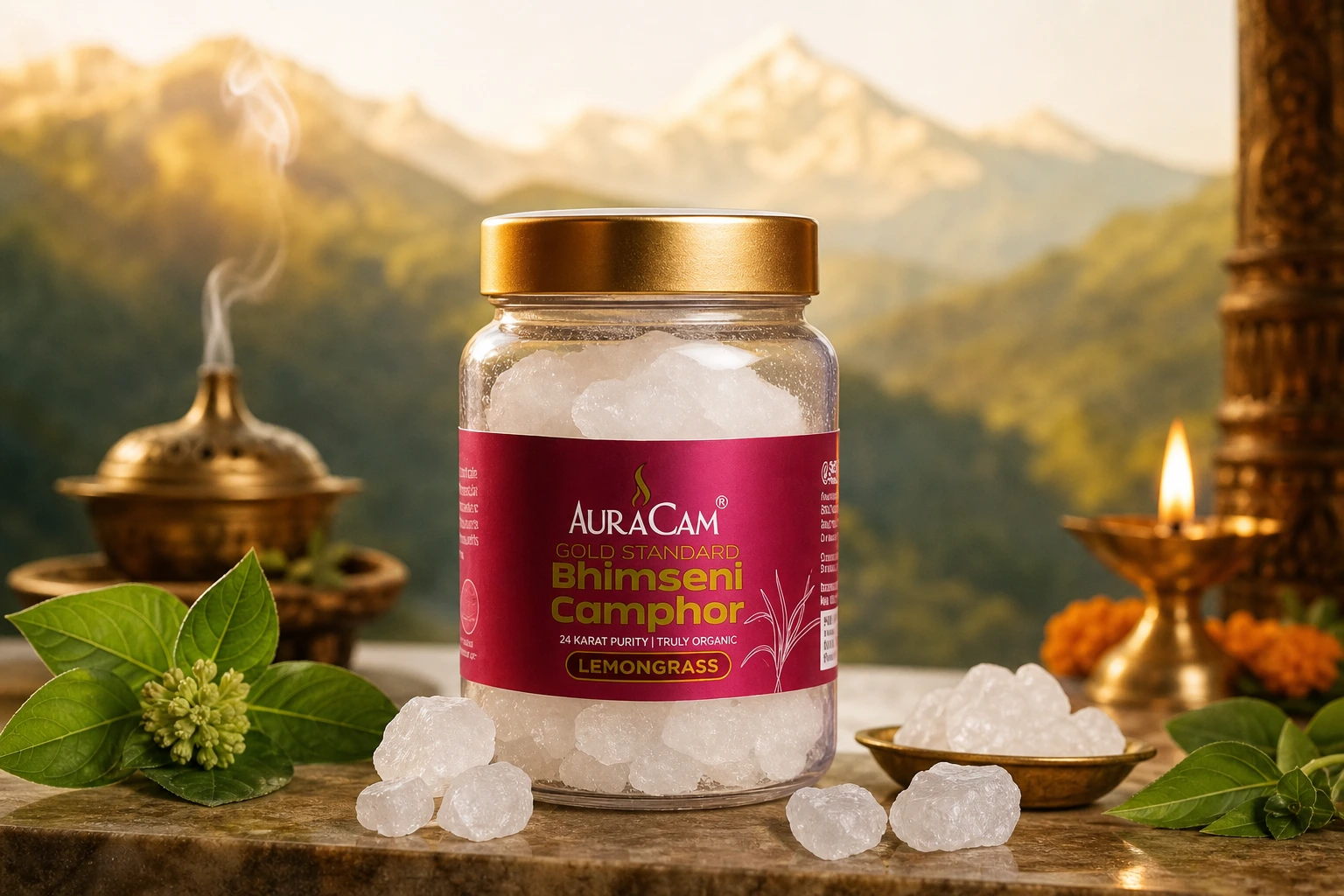
What is Bhimseni camphor? If you have ever walked into a puja room and felt that distinctive, cool, forest-like fragrance – pure, clean, and almost sacred – you have already experienced it. Bhimseni camphor, known across India as Pacha Kapoor, Desi Kapoor, Patri Kapoor, or Nagi Karpura, is the most revered and authentic form of natural camphor available in the country. It is the variety that temples demand, that Ayurvedic practitioners prescribe, and that generations of Indian families have trusted for their most auspicious moments.
Yet for most Indian consumers in 2026, the camphor on their pooja thali is synthetic – a mass-manufactured white tablet that bears little resemblance to the natural substance it imitates. Understanding what Bhimseni camphor actually is, where it comes from, and why it stands apart is not just a question of product knowledge. It is a matter of ritual purity, family health, and conscious consumption.
At Auracam, we craft premium Bhimseni camphor using the highest-grade natural ingredients sourced from select pine trees, backed by over 60 years of manufacturing heritage through our parent company, SVD PineChem – a pioneer in India’s pine chemicals industry through the Dujodwala Group. This is our complete guide to the original kapoor.
What is Bhimseni camphor and where does it come from?
What is Bhimseni camphor at its most fundamental level? It is a 100% natural, crystalline camphor derived by steam distillation of the wood, bark, and roots of the Cinnamomum camphora tree – also known as the camphor laurel – and select high-resin pine trees. The resulting crude camphor is then purified through a traditional sublimation process, where it vaporises under heat and recrystallises as white, irregularly shaped flakes of extraordinary purity – often exceeding 99%.
The word “Bhimseni” is rooted in Indian cultural tradition. According to ancient Indian lore, the name is connected to Bhima from the Mahabharata – the strongest and most formidable of the Pandava brothers – reflecting the camphor’s exceptional strength of fragrance, its potency in purification, and its unwavering natural purity. Just as Bhima was the gold standard of power, Bhimseni kapoor became the gold standard of camphor.
The Cinnamomum camphora tree grows primarily across South and Southeast Asia, including parts of India, Nepal, China, Taiwan, and the Indonesian archipelago. In India, camphor trees are found in temperate and sub-Himalayan forest zones, and high-quality pine-derived camphor is produced by specialised manufacturers with access to certified, sustainably sourced raw materials.
This origin story matters because it is what fundamentally separates Bhimseni camphor from the white uniform tablets most Indian households use today.
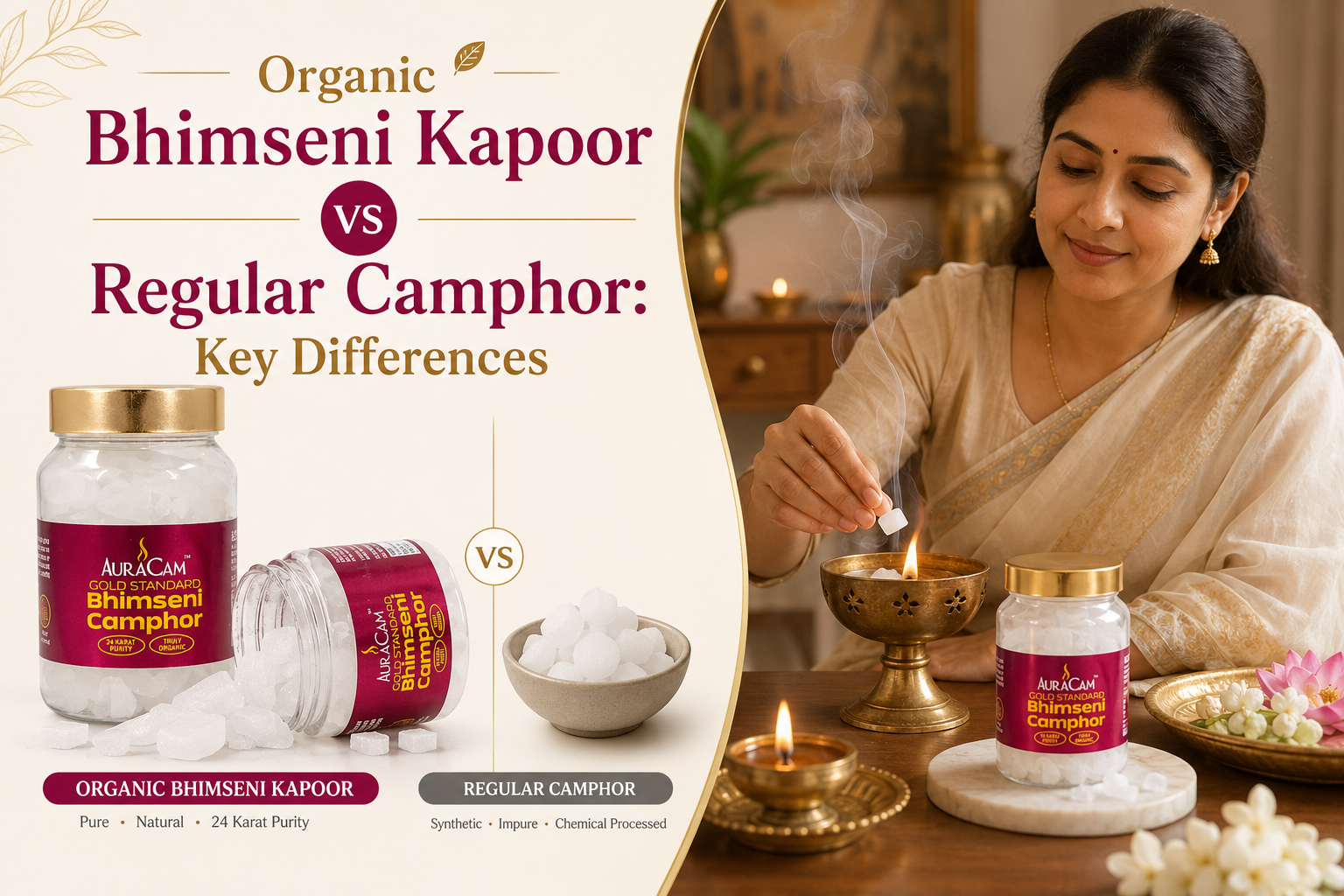
Why is Bhimseni camphor different from regular camphor?
What is Bhimseni camphor compared to the camphor tablets sold at every neighbourhood kirana store? The difference is profound – and understanding it is the single most important thing an Indian consumer can know about this product category.
Regular camphor tablets available in India are predominantly synthetic. They are manufactured from turpentine oil – a petroleum-derived substance – through a chemical synthesis process. These tablets are uniform in shape and bright white in colour because they are produced in moulds under industrial conditions. While chemically related to natural camphor, they contain binders, additives, and processing agents that affect their fragrance quality, burn characteristics, and health profile.
Bhimseni camphor, by contrast, is entirely plant-derived. Its key distinguishing features include:
- Irregular, crystalline shape – because it forms naturally through sublimation, no two pieces are identical. Uniform, perfectly round or square pieces are almost certainly synthetic.
- Translucent or semi-opaque appearance – genuine Bhimseni camphor has a slightly translucent quality, unlike the bright chalk-white of synthetic tablets.
- Burns completely without residue – natural camphor sublimates cleanly. Synthetic camphor leaves a waxy or oily residue on the burning surface.
- A complex, multi-layered fragrance – Bhimseni camphor has a cool, forest-like, slightly sweet aromatic profile. Synthetic camphor has a sharper, more one-dimensional chemical smell.
- Naturally edible in small quantities – Bhimseni camphor can be safely used in trace amounts in traditional Indian sweets and prasad. Synthetic camphor absolutely cannot.
According to a 2026 India camphor market analysis by 6Wresearch, India’s natural camphor segment is growing at a CAGR of 7.2% through 2031, driven specifically by increasing consumer awareness of the difference between natural and synthetic varieties. Urban and semi-urban Indians are increasingly seeking authentic, clean-label alternatives – and Bhimseni camphor is the premium choice.
Why is natural Bhimseni camphor important in India in 2026?
What is Bhimseni camphor’s role in modern India, beyond its traditional associations? In 2026, the answer is more relevant than ever, for three converging reasons: a wellness renaissance, a spiritual revival, and a growing sensitivity to what goes into homes and bodies.
The wellness renaissance. India’s Ayurveda and natural wellness market is growing rapidly, with a surge in demand for clean, plant-derived products across every household category – from food to personal care. Bhimseni camphor sits at the intersection of this trend perfectly. Ayurvedic texts from ancient India – including the Raj Nighantu – identify Bhimseni camphor as among the finest grades of karpura, prized for its Deepana (digestive), Pachana (metabolic), and Shothahara (anti-inflammatory) properties. In 2026, these properties are not just tradition – they are increasingly validated by wellness consumers who read labels and research ingredients.
The spiritual revival. According to industry insights, camphor remains the single most universally used product in Indian ritual practice, consumed across Hindu, Jain, and Buddhist ceremonies throughout the country. Post-pandemic India has seen a significant deepening of home-based spiritual practices, with more families conducting daily puja, hawan, and aarti at home. For these practices, the quality of camphor matters – both for the experience of ritual and for the purity of the environment it creates.
The clean-label movement. Urban Indian consumers – particularly in Tier 1 and Tier 2 cities – are increasingly reading ingredient labels, seeking natural alternatives to chemical products, and choosing brands with transparent sourcing. Bhimseni camphor, as a plant-derived, additive-free product, aligns naturally with this shift.
The global camphor market was valued at USD 480.69 million in 2024 and is projected to reach USD 922.01 million by 2035, growing at a CAGR of 6.1%, according to Introspective Market Research. India holds approximately 18.4% of the global camphor market – the single largest country share – reflecting the depth of demand across our ritual, medicinal, and household use cases.
What are the most important benefits of Bhimseni camphor?
What is Bhimseni camphor good for in everyday Indian life? The answer encompasses ritual, health, home care, and aromatherapy – which is why it has remained in continuous use across India for thousands of years.
In ritual and spiritual practice:
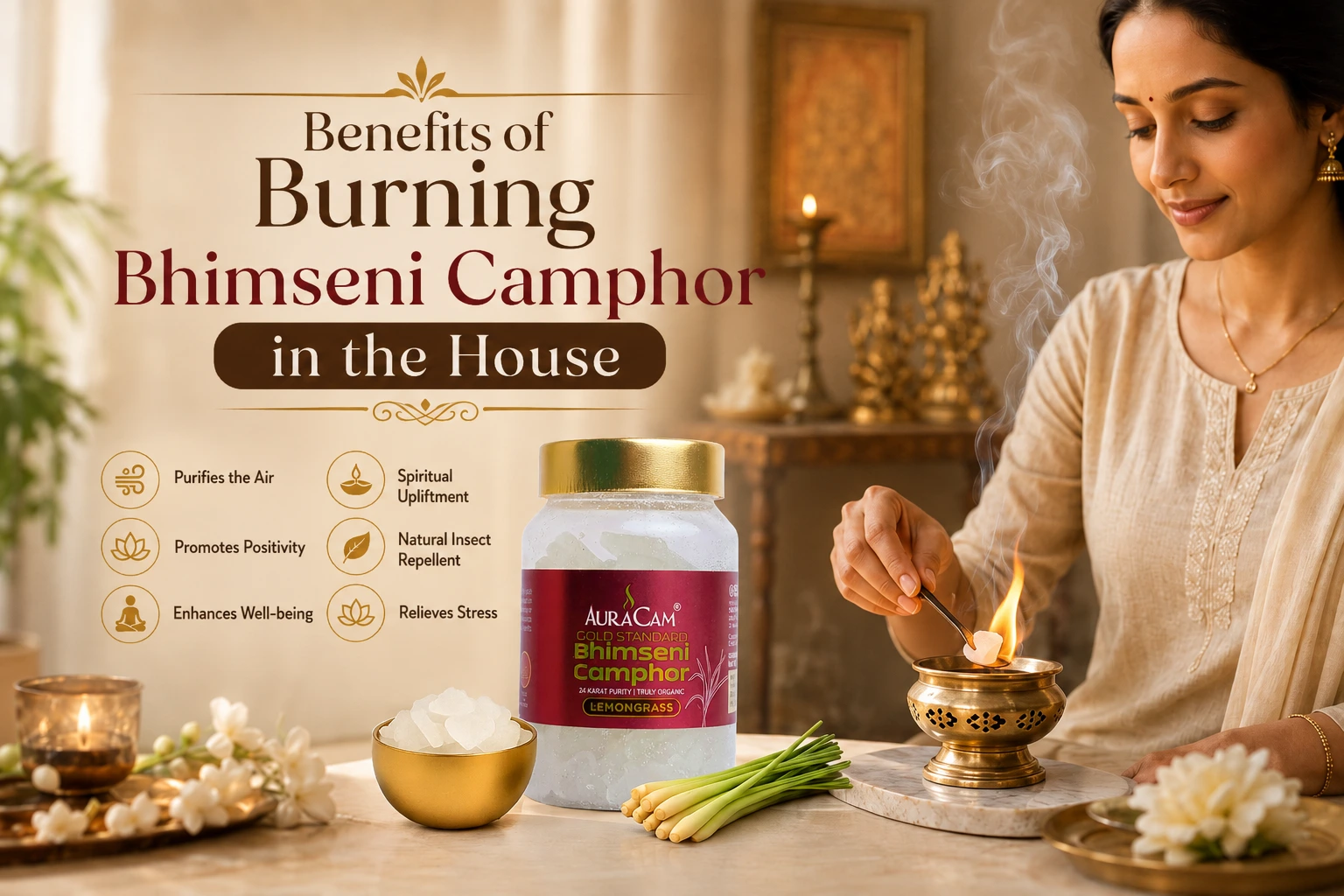
Burning Bhimseni camphor during aarti or hawan is not merely tradition – it is science meeting spirituality. The volatile compounds released when natural camphor burns are genuinely antimicrobial, documented to reduce airborne pathogens in enclosed spaces. In Vastu Shastra, burning camphor in specific directions is believed to remove negative energy and attract positive vibrations. Because Bhimseni camphor burns without residue and without synthetic fumes, it is the only variety considered ritually pure by traditional practitioners.
For air purification and home care:
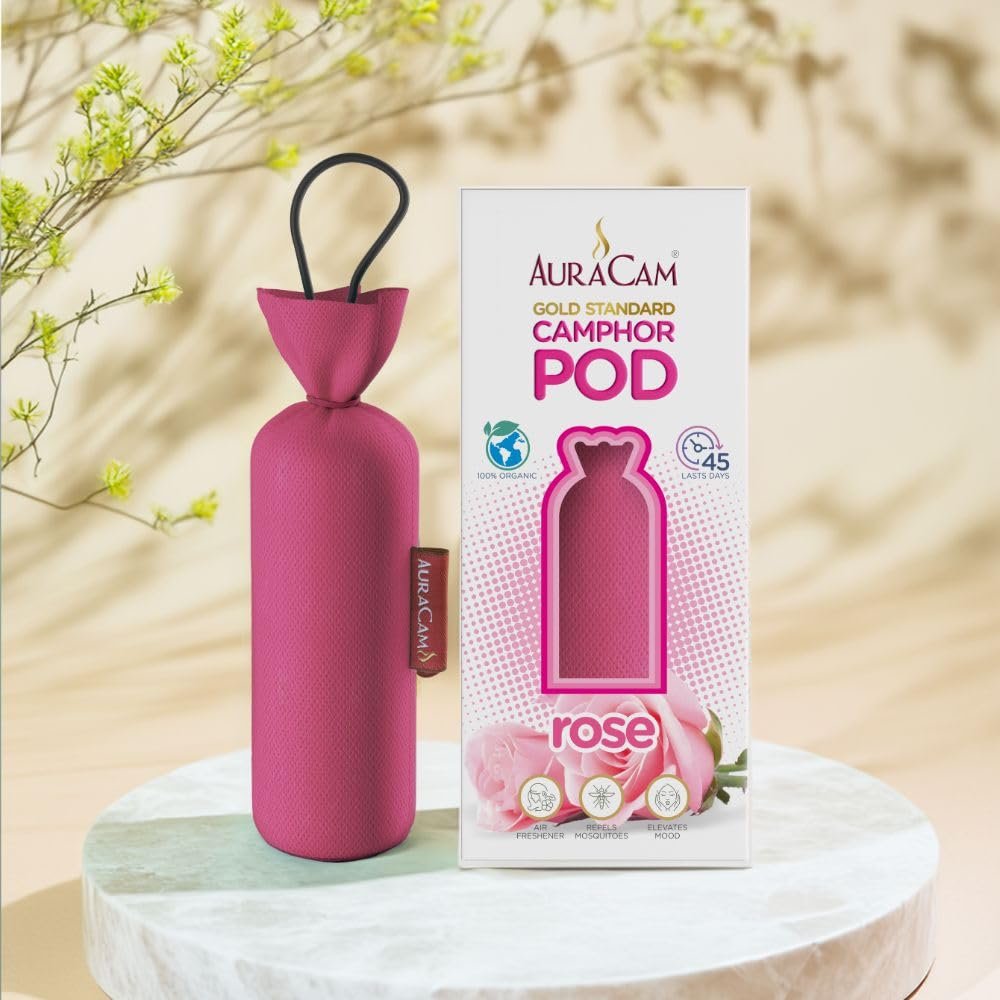
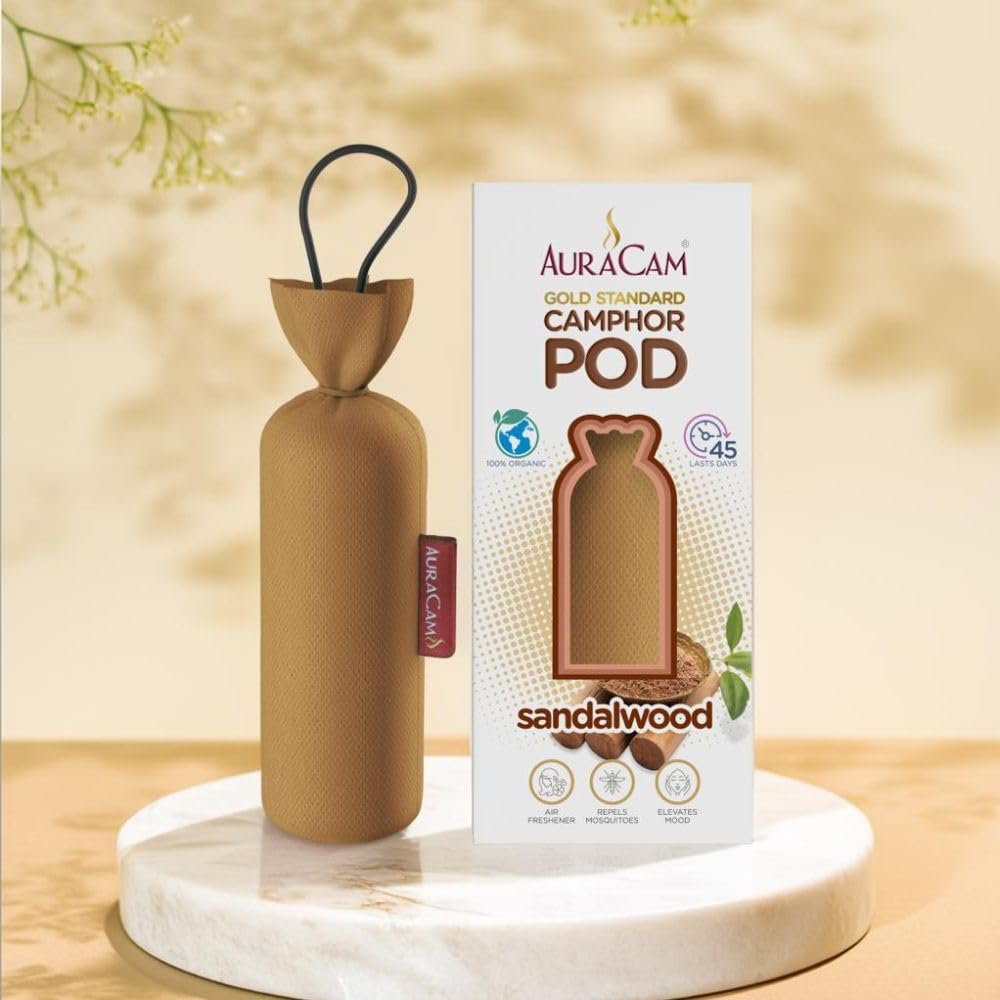
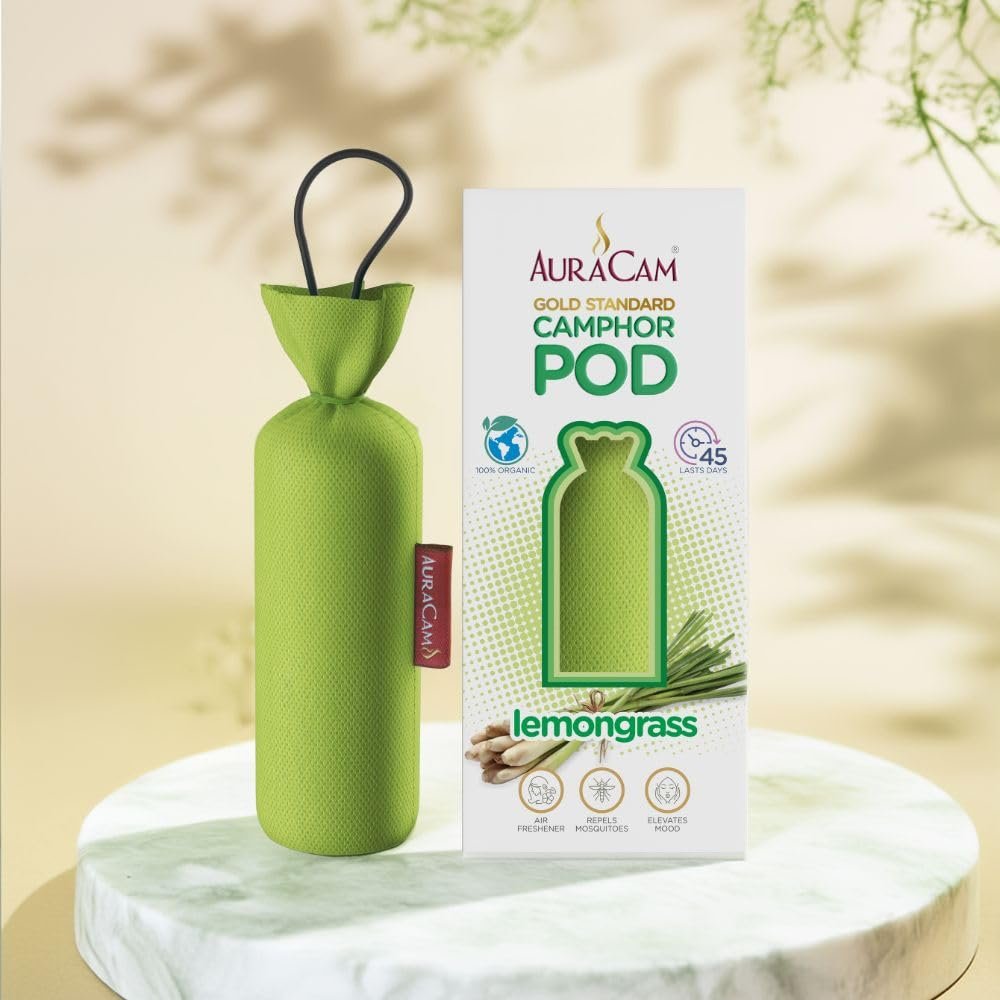
Bhimseni camphor, when burned or placed in a camphor diffuser, naturally releases purifying aromatic compounds that freshen indoor air, reduce microbial presence, and create a calming olfactory environment. It is an entirely natural alternative to chemical air fresheners, which typically contain volatile synthetic compounds. When placed in camphor pouches within wardrobes, it naturally deters insects, moths, and cockroaches – without the chemical concerns associated with naphthalene-based mothballs.
As a natural mosquito repellent:
Bhimseni camphor is one of India’s oldest and most effective natural mosquito repellents. The characteristic camphor aroma overpowers the olfactory senses that mosquitoes use to locate hosts, effectively confusing and repelling them. During India’s monsoon season – June through October – demand for camphor-based repellent products rises sharply, as urban families seek chemical-free alternatives to DEET-containing products.
For Ayurvedic health applications:
Traditional Ayurveda recommends Bhimseni camphor for steam inhalation to relieve nasal congestion and cough, topical application mixed with coconut or sesame oil for joint pain, muscle soreness, and skin concerns, and aromatherapy use for stress relief, mental clarity, and improved sleep quality. Its antifungal properties make it a time-tested remedy for skin conditions, while its cooling nature makes it beneficial for relieving minor inflammation.
For aromatherapy and meditation:
The gentle, complex aroma of Bhimseni camphor – unlike the sharp chemical hit of synthetic camphor – is genuinely conducive to meditation and mindfulness practice. When diffused at low intensity through an electric camphor diffuser, it creates an environment that promotes focus, reduces anxiety, and supports a calming ritual experience.
How does Auracam ensure premium Bhimseni camphor quality?
What is Bhimseni camphor quality assurance when it comes from Auracam? The answer begins with a heritage of 60 years and ends with rigorous, laboratory-verified purity at every batch.
Auracam’s authentic Bhimseni camphor is manufactured by SVD PineChem, part of the renowned Dujodwala Group – a name synonymous with India’s pine chemicals industry for over six decades. The Dujodwala Group is one of India’s most respected names in terpene-based chemical manufacturing, with a track record that spans generations of industry leadership. This is not a startup or a repackager – it is a vertically integrated manufacturer with deep expertise in every stage of the camphor production chain.
Our quality assurance process includes:
- Raw material verification – only high-grade pine and Cinnamomum camphora derived inputs, sourced from certified suppliers
- Steam distillation and natural sublimation – preserving the full aromatic and therapeutic profile of natural camphor without chemical shortcuts
- Laboratory purity testing – each batch is tested to ensure consistency, purity, and the absence of synthetic additives or adulterants
- Stringent quality control lab – ensuring that only camphor meeting our Gold Standard specification reaches customers
The result is a product that is noticeably different in fragrance, appearance, and burn quality from anything in the mass-market camphor category.
What does Bhimseni camphor cost in India in 2026?
What is Bhimseni camphor pricing in the current Indian market? Natural Bhimseni camphor commands a premium over synthetic camphor, reflecting its natural sourcing, artisanal production process, and superior quality. Here are realistic 2026 Indian retail market estimates:
Retail pack pricing (Auracam and premium natural camphor segment):
- Small packs (50g–100g): ₹180–₹280
- Standard packs (250g): ₹450–₹650
- Larger packs (500g): ₹800–₹1,200
- Premium gift hampers and combo packs: ₹800–₹2,250
Comparison with synthetic camphor: Mass-market synthetic camphor tablets in India retail at ₹20–₹60 for 50–100g packs. The price differential reflects the fundamental difference in raw material, production method, and product quality. For consumers who understand what they are buying, the premium for authentic Bhimseni camphor is fully justified.
Bulk and institutional pricing for temples, religious institutions, and premium retailers is available upon request from Auracam, with volume-based pricing offering meaningful savings for regular, high-volume purchasers.
How to identify genuine Bhimseni camphor before you buy
What is Bhimseni camphor’s most reliable authentication test? Here are the five markers that every Indian consumer should know:
- Shape and size – genuine Bhimseni camphor is always irregular. If your camphor comes in perfect circles, squares, or hexagons, it is synthetic.
- Colour and translucency – look for a slightly translucent, off-white or milky-white crystalline appearance. Bright chalk-white is typically synthetic.
- Burn test – burn a small piece on a non-porous surface. Natural Bhimseni camphor burns completely, leaving absolutely no residue. Synthetic camphor leaves a waxy, oily film.
- Fragrance complexity – natural Bhimseni camphor has a cool, forest-like, layered aroma with subtle sweet and woody undertones. Synthetic camphor has a sharp, one-note chemical smell that can cause irritation.
- Brand and sourcing transparency – purchase from brands that disclose their manufacturing source, ingredient origin, and purity standards. Unusually low prices for products claiming to be “100% Bhimseni” are a red flag for adulteration.
Conclusion: The gold standard is not just a claim
What is Bhimseni camphor, when you strip away the marketing? It is nature’s most perfect camphor – a gift from ancient forests, refined by time-honoured craft, and validated by thousands of years of Indian cultural and spiritual tradition. In a market increasingly crowded with synthetic imitations, authentic Bhimseni camphor stands apart by doing something simple and rare: being exactly what it claims to be.
At Auracam, we believe that what you burn in your puja room, what you breathe during meditation, and what you place in your home matters. Our Gold Standard commitment means every crystal of Bhimseni camphor that reaches you has been produced with the same integrity that the Dujodwala Group has maintained for over 60 years.
If you are ready to experience the difference that authentic, natural Bhimseni camphor makes – in your rituals, your home, and your wellbeing – explore Auracam’s full range of premium Bhimseni camphor products and discover India’s original Gold Standard kapoor.
Frequently Asked Questions About Bhimseni Camphor
What is Bhimseni camphor, and how is it different from regular camphor?
Bhimseni camphor is a 100% natural, plant-derived camphor extracted from Cinnamomum camphora trees and high-resin pine through steam distillation and sublimation. Regular camphor is synthetic, manufactured from turpentine oil through chemical synthesis. Bhimseni camphor burns without residue, has a richer and more complex fragrance, is considered ritually pure, and is safe in trace quantities for food use – none of which applies to synthetic camphor.
Is Bhimseni camphor safe to use at home every day?
Yes. Bhimseni camphor is safe for daily use in home puja, as a mosquito repellent, or in camphor diffusers, provided there is adequate ventilation in enclosed spaces and it is kept away from flammable materials and out of reach of young children. Its natural composition means it does not release the synthetic chemical fumes associated with mass-market camphor products.
How can I tell if camphor is pure Bhimseni camphor or synthetic?
Genuine Bhimseni camphor has an irregular crystalline shape, a slightly translucent appearance, and burns completely without any oily or waxy residue. It has a cool, complex, forest-like aroma. Synthetic camphor is bright white, perfectly uniform in shape, and leaves a residue when burned. When in doubt, buy from a certified natural camphor brand that discloses its sourcing and purity standards.
Where does the name “Bhimseni” camphor come from?
The name Bhimseni is traditionally associated with Bhima from the Mahabharata – symbolising exceptional strength, potency, and purity. It reflects the camphor’s superior natural qualities compared to ordinary camphor varieties. The name is used across India, though the same product is also called Pacha Kapoor (South India), Desi Kapoor (North India), Patri Kapoor, and Nagi Karpura depending on the region.
Can Bhimseni camphor be used in food or prasad?
Bhimseni camphor is traditionally used in trace amounts in certain Indian sweets, temple prasad, and Ayurvedic formulations because, unlike synthetic camphor, it is food-safe in very small quantities. Synthetic camphor must never be consumed. Always purchase Bhimseni camphor from a verified natural source and use only in the smallest traditional quantities – consult an Ayurvedic practitioner for medicinal or dietary use guidance.
What is the best way to use Bhimseni camphor in a diffuser or puja room?
For puja, place a small piece of Bhimseni camphor in a traditional kapoor dani or electric camphor diffuser and light or activate it during aarti. Ensure the room has gentle ventilation. For daily aromatherapy, an electric camphor night lamp or pod-style diffuser using natural camphor provides a consistent, mess-free aromatic experience. Place camphor pouches in wardrobes, bathrooms, and storage areas for ongoing freshness and natural insect deterrence.