A home that smells “expensive” to guests almost never comes from the strongest fragrance – it comes from a consistent, natural, non-overpowering scent that greets people at the door without announcing itself as an air freshener. Guests notice the feeling of a home before they consciously register the decor, and smell is the fastest sense for forming that first impression, often before a single word is exchanged.
Here’s what actually separates a “nice smelling home” from one that feels genuinely put-together – and which fragrance types get it right.
Why Some Homes Smell "Expensive" and Others Just Smell "Fresh"
The difference usually comes down to three things:
- Consistency over intensity. A home that smells the same, subtly, in every room feels intentional. A home with a strong blast of fragrance at the entrance that fades by the living room feels like it’s covering something up – even if it isn’t. Hotels and high-end retail spaces use this principle deliberately: a low, consistent scent throughout, not a strong one at the door.
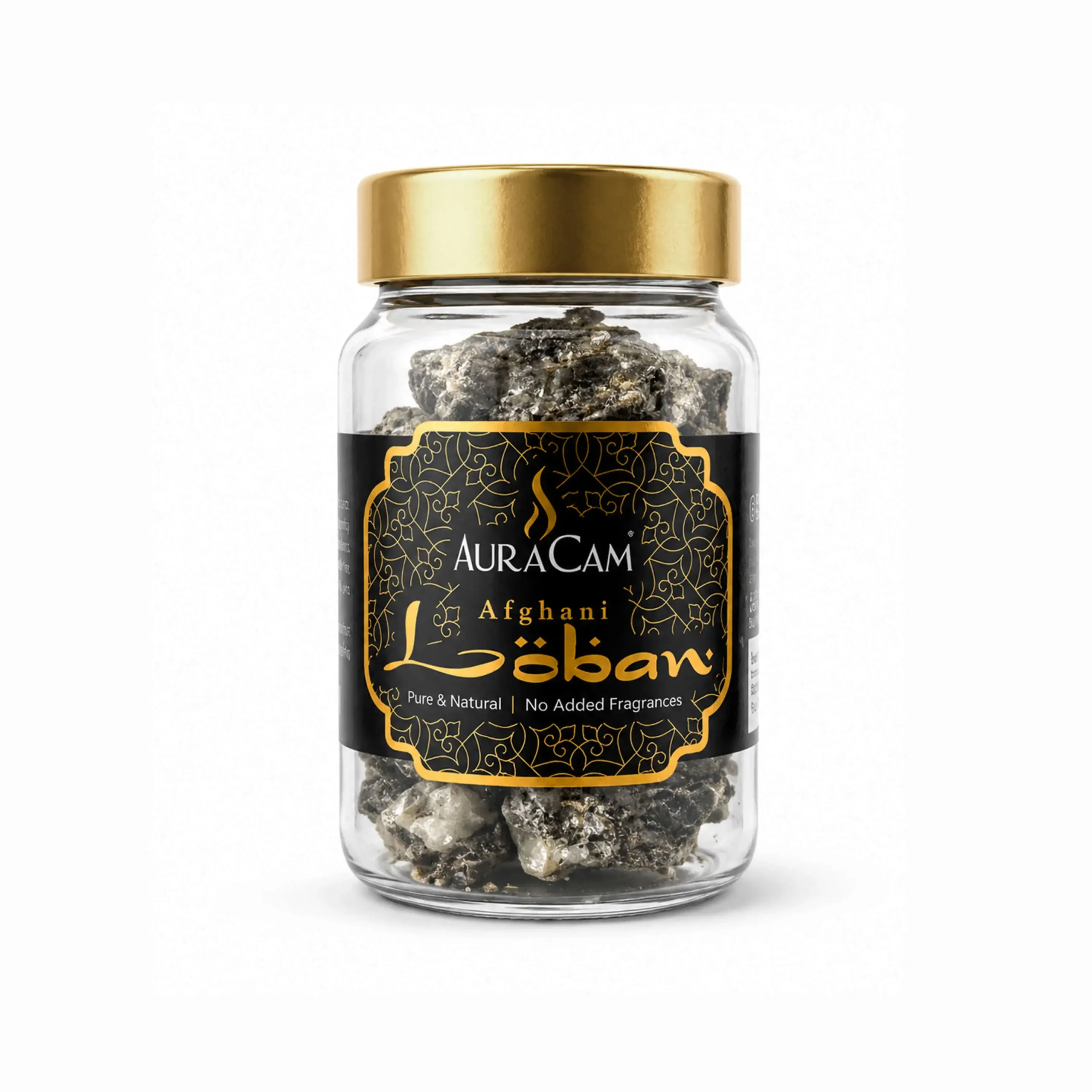
- Natural notes over synthetic sweetness. Most aerosol sprays and cheap plug-ins use synthetic fragrance compounds that read as “air freshener” almost instantly – guests can tell. Natural notes like sandalwood, oudh, and camphor read as considered rather than sprayed-on, because they’re associated with genuine materials rather than a chemical formula.
- Scent that matches the space, not just personal preference. A living room with a heavy floral scent can feel mismatched, the same way a pooja corner with a sharp citrus fragrance feels off. Getting the fragrance right for the specific room is what makes it feel deliberate rather than random.
The Mistake Most Homes Make Before Guests Arrive
The most common last-minute habit – spraying an aerosol freshener right before guests walk in – actually works against you. A strong, fresh-out-of-the-can scent is instantly recognizable as “just sprayed,” which reads as covering up rather than genuinely fresh. A home that already smells good before anyone knew guests were coming feels far more authentic, because it clearly isn’t performative.
This is why a passive, always-on fragrance source – something that’s simply part of how the home smells day to day – outperforms a last-minute spray every time.
Which Fragrances Actually Read as "Expensive"
Fragrance | Why It Reads as Premium | Best Room |
Oudh | Rich, warm, and associated with luxury fragrances and perfumery | Living room, entryway |
Sandalwood | Earthy, calming, associated with traditional and high-end incense | Pooja room, hallway |
Lavender | Soft, floral, immediately reads as “clean and calm” rather than “sprayed” | Bedroom, guest room |
Original (pure camphor) | Clean, crisp, unmistakably natural rather than synthetic-sweet | Kitchen, bathroom, all-purpose |
Notice what’s missing from this list: heavy synthetic florals, “ocean breeze,” and artificial fruit scents – these are the fragrance families guests most reliably associate with mass-market air fresheners, which works against the effect you’re going for.
How to Set Up a Guest-Ready Home Fragrance (Without Overdoing It)
- Pick one dominant scent per zone, not one scent for the whole house. Oudh at the entrance and living room, Lavender in the bedroom, Sandalwood near the pooja corner – a home that smells identical in every room actually reads as less considered than one with subtle zone-based fragrance.
- Let it run passively, not as a last-minute spray. A camphor-based freshener that releases fragrance naturally over hours does the “already smells good” job far better than a spray timed to guest arrival.
- Keep intensity low in small or enclosed rooms. A guest bathroom or small hallway needs far less fragrance than a living room – overdoing it in a small space is what tips a nice scent into “trying too hard.”
- Refresh before, not during. Replace or reapply your freshener a day or two before guests arrive, not the hour before – this avoids the “just sprayed” giveaway entirely.
- Pair scent with a clean space, not instead of one. No fragrance, however good, substitutes for basic cleanliness – it’s a layer on top of a genuinely tidy space, not a cover for one that isn’t.
Why Natural Camphor-Based Fresheners Work Well for This
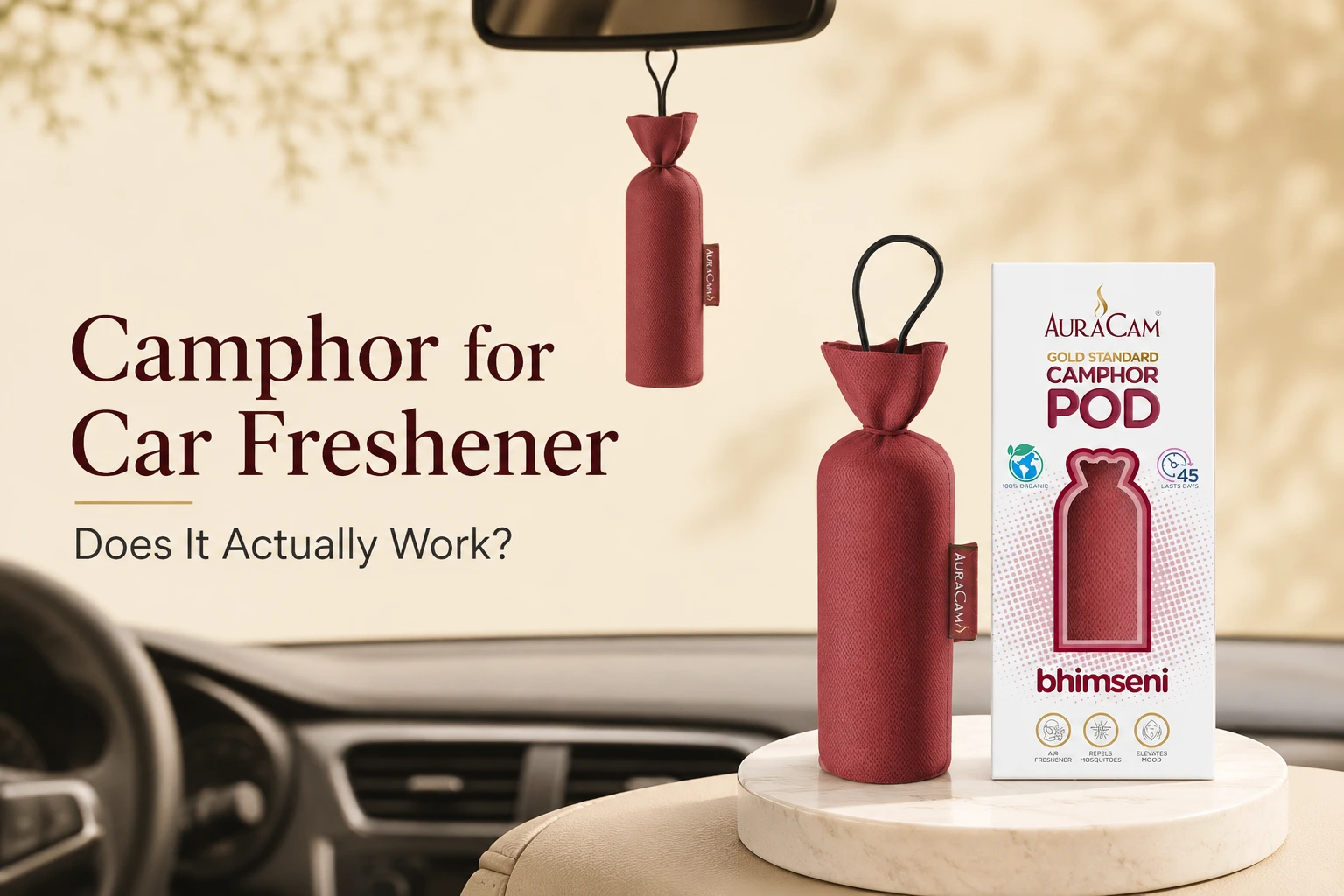
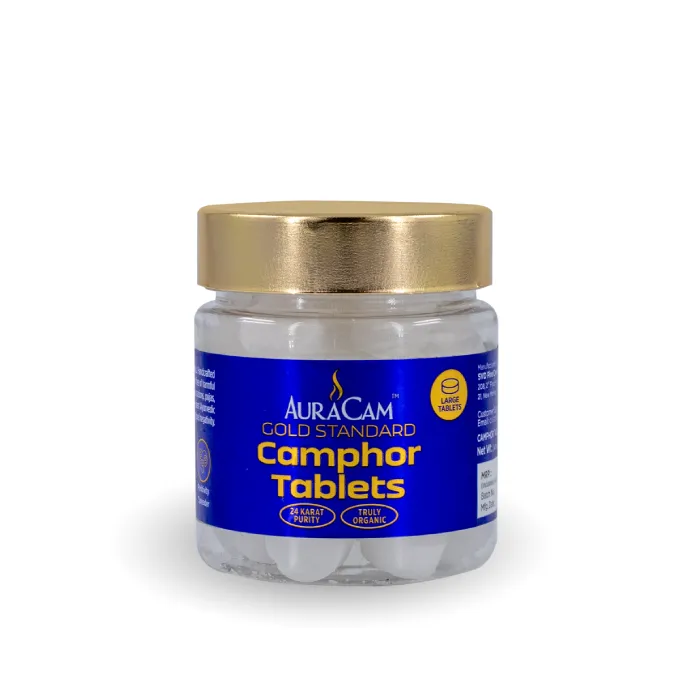
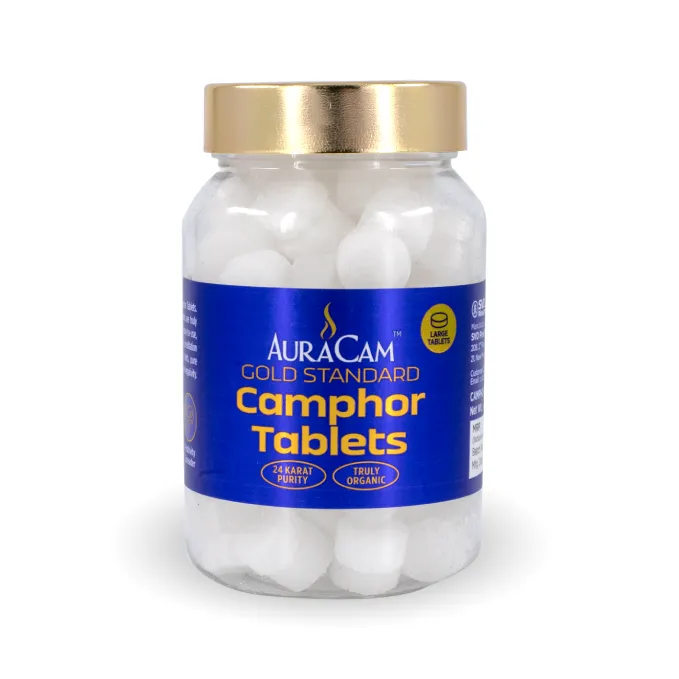
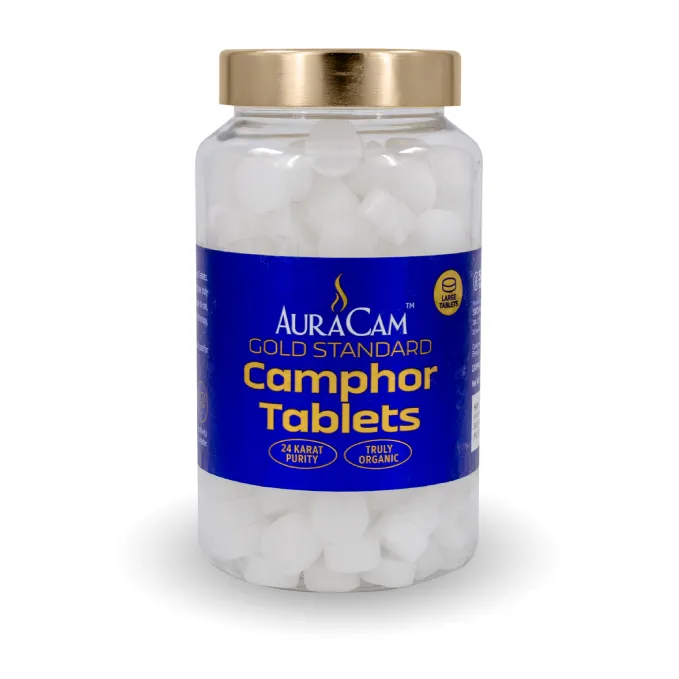
Camphor-based air fresheners work through natural sublimation – the fragrance releases steadily over time rather than in a single strong burst the way aerosol sprays do. That steady, lower-intensity release is exactly the “already smells good, not just sprayed” effect that reads as more considered to guests. It’s also why camphor has been used in Indian homes for generations specifically in the rooms guests actually notice – entryways, living rooms, and pooja corners – rather than as a quick fix.
FAQs
What fragrance makes a home smell most “expensive” to guests?
Warm, natural notes like oudh and sandalwood are most consistently associated with a premium, considered feel, largely because they avoid the synthetic-sweet quality of mass-market sprays and plug-ins that guests can often identify instantly.
Should I use the same fragrance in every room?
No – using one dominant scent per zone (for example, Oudh in the living room, Lavender in the bedroom) reads as more intentional than a single fragrance repeated identically throughout the home.
Is it better to spray air freshener right before guests arrive, or use something passive?
A passive, always-on fragrance source is more effective. A strong scent sprayed right before guests arrive is often recognizable as “just sprayed,” which can read as masking rather than genuine freshness. A home that already smells good before guests are expected feels more authentic.
Why do natural fragrances like camphor and sandalwood smell more “expensive” than synthetic sprays?
Natural fragrance notes are associated with genuine materials – resins, sandalwood, natural oils – rather than a manufactured chemical scent profile, which is why they tend to read as more considered and premium compared to synthetic, sweet-leaning aerosol fragrances.
Which AuraCam fragrance is best for the living room where guests spend the most time?
Oudh is best suited to living rooms and entryways for a rich, warm first impression, while the Original variant works well as a lighter, all-purpose option if you prefer something more subtle.
How often should I replace a natural air freshener to keep a guest-ready home?
This depends on room size and ventilation, but as a general rule, refresh or replace it a day or two before you expect guests, rather than the same day – this avoids the fragrance reading as freshly applied.
Set the Right First Impression, Room by Room
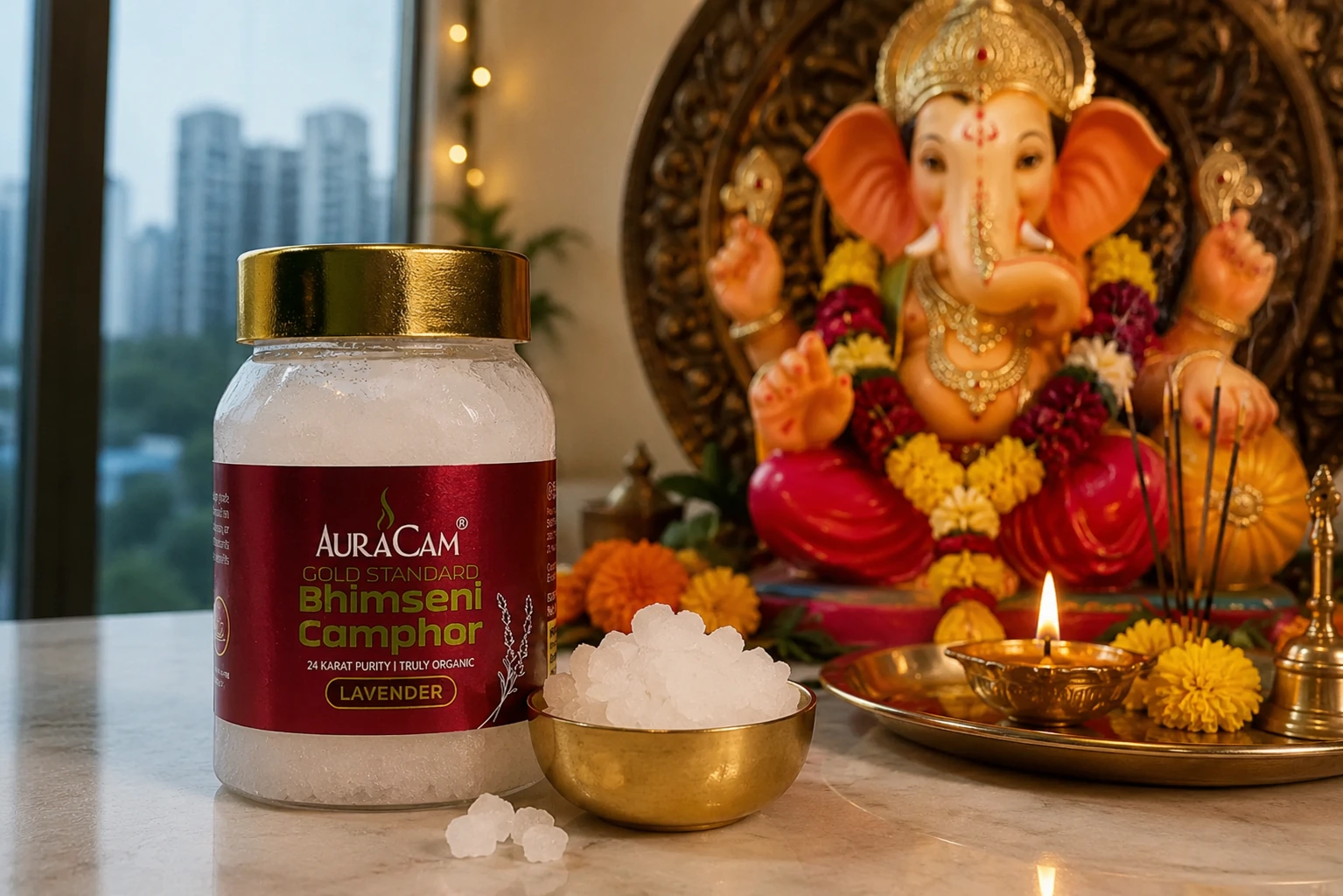
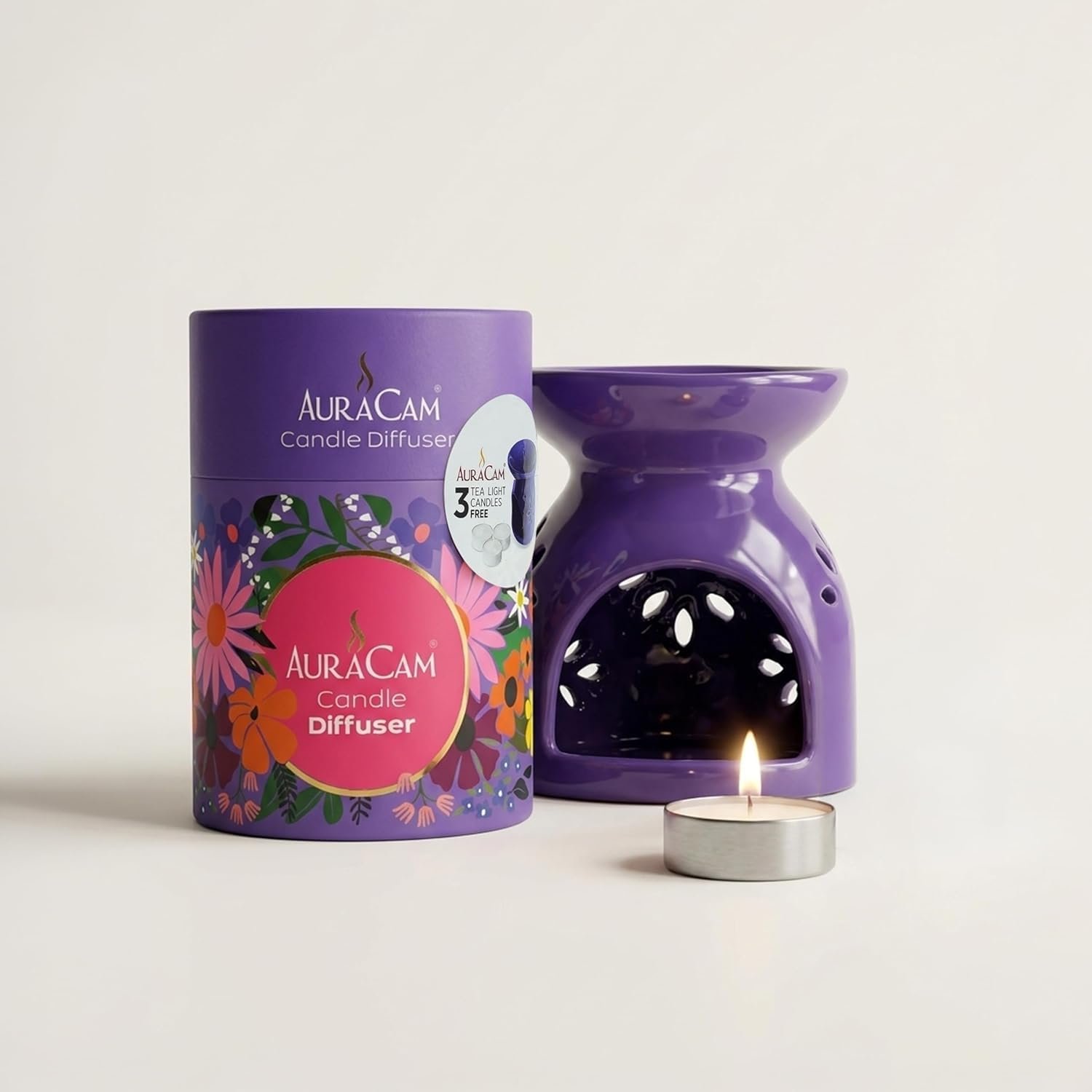
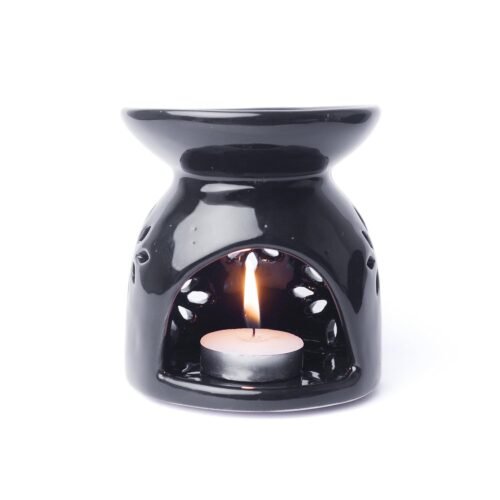
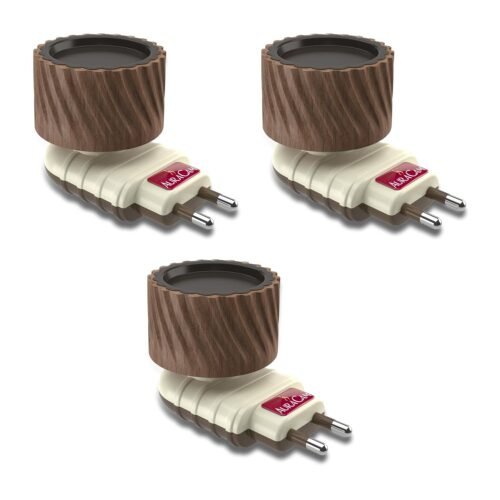
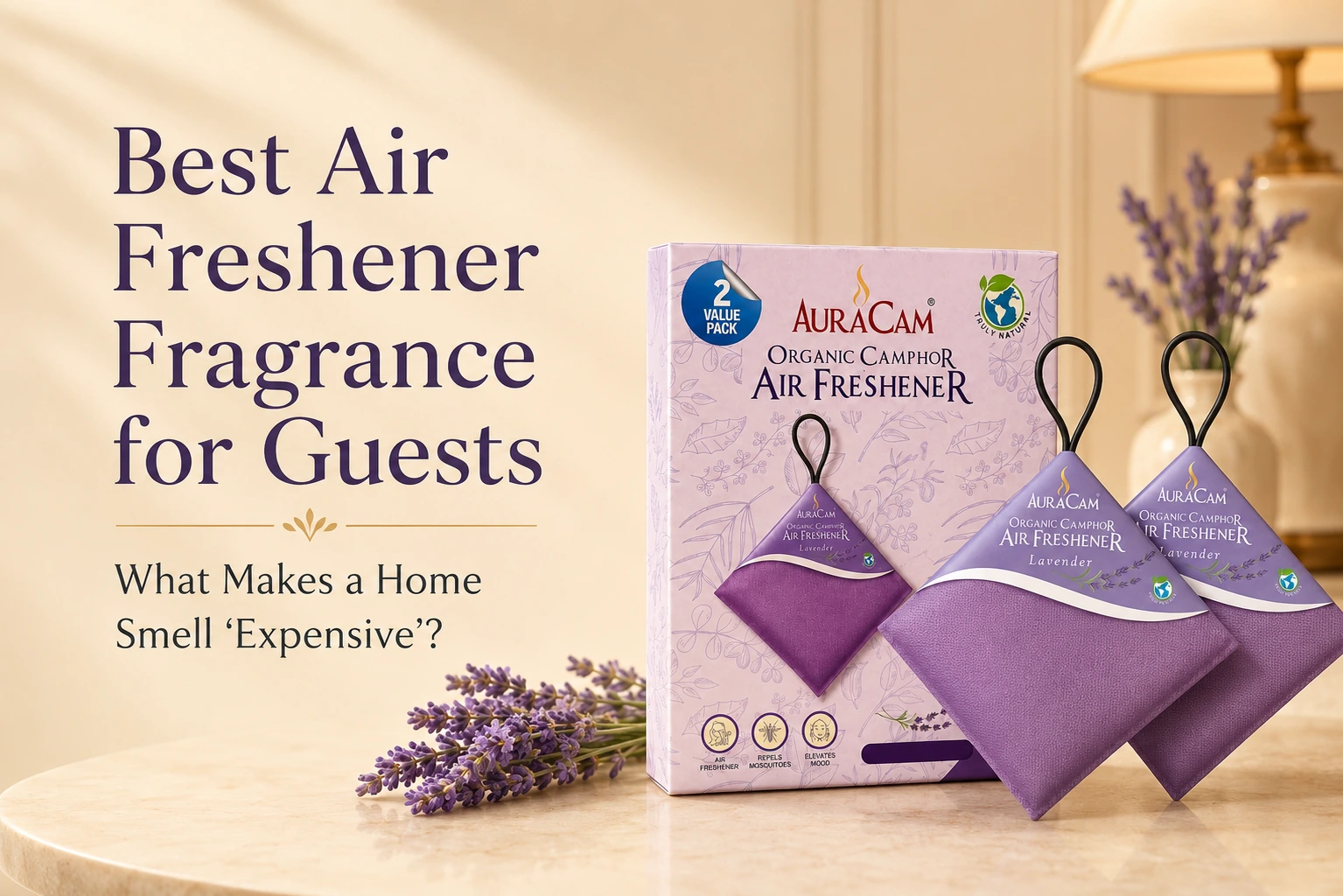
AuraCam’s Camphor Air Fresheners come in four natural fragrances – Oudh, Sandalwood, Original, and Lavender – designed for exactly this kind of considered, room-by-room home fragrance, without a single aerosol or synthetic additive.