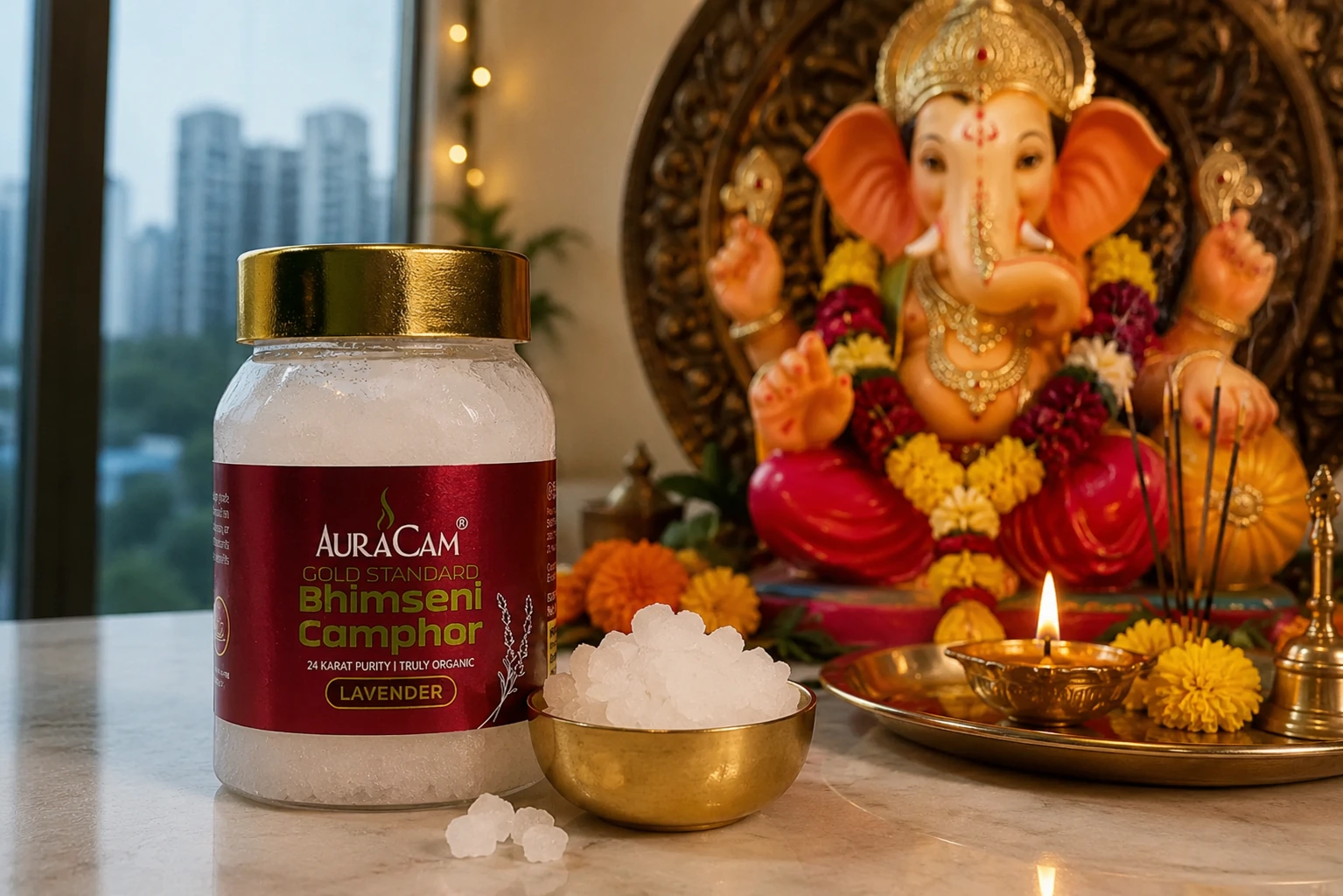
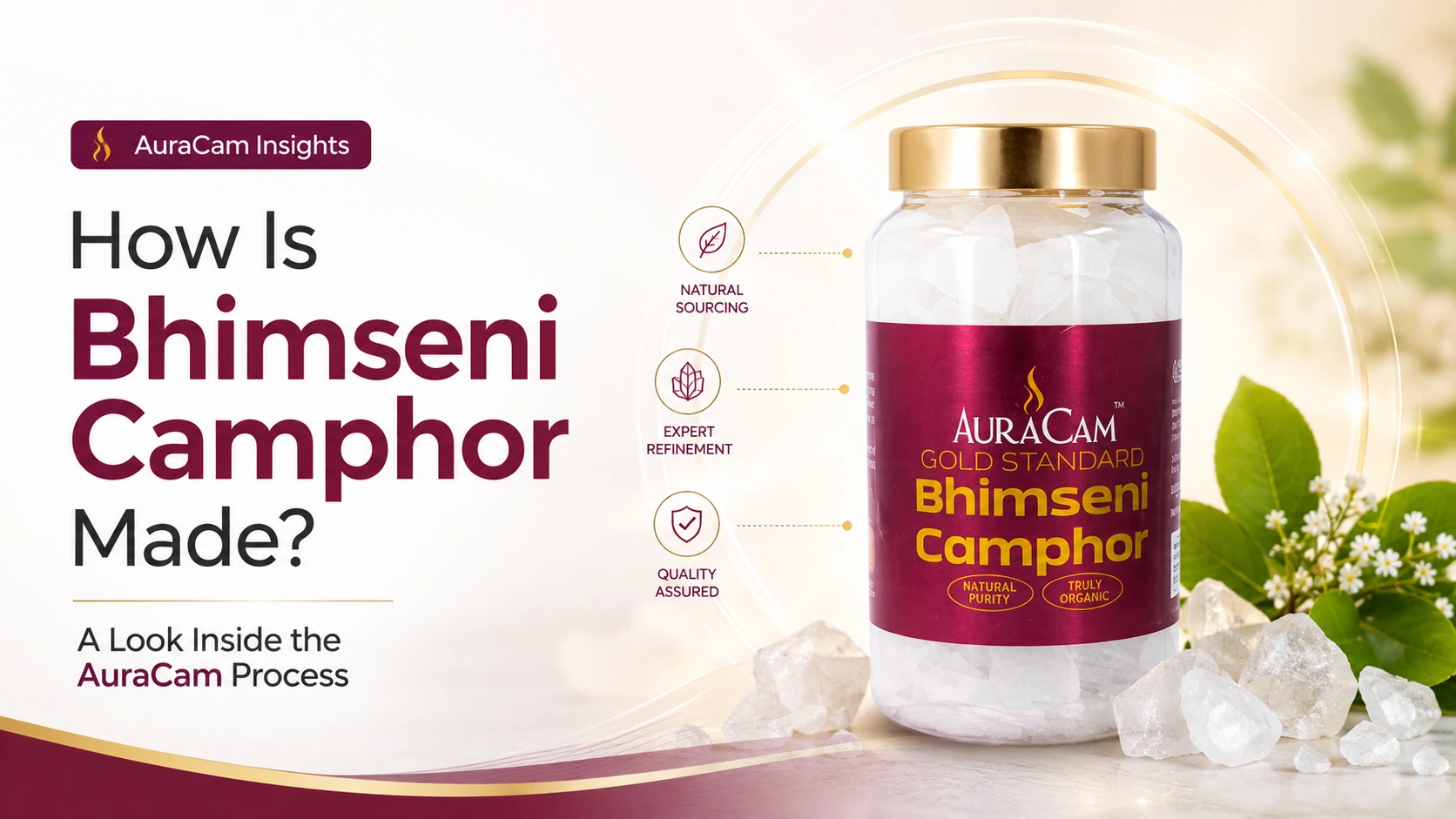
Bhimseni camphor is made by steam-distilling the resin and wood of the Cinnamomum camphora (camphor laurel) and select pine trees, then repeatedly purifying the raw crystals until they reach a near-100% natural purity – with no synthetic additives, paraffin, or artificial fragrance. This is different from most camphor sold in the market, which is synthetically manufactured from turpentine oil in a chemical lab.
That single difference – natural extraction versus lab synthesis – is why Bhimseni camphor is considered the “gold standard” for pooja, aromatherapy, and wellness use in India. At AuraCam, this is exactly the process behind every batch of camphor we make – here’s how it goes from tree to tablet.
Step 1: Sourcing the Raw Material
Genuine Bhimseni camphor starts with camphor-yielding trees grown in select, camphor-rich regions. Only mature trees are used, since younger trees produce a lower yield of natural camphor oil. Reputable manufacturers work with long-standing sourcing networks built over decades to ensure consistent quality – this is one reason heritage manufacturers with generations of relationships in the pine chemicals industry tend to produce more reliable camphor than newer, unverified sellers.
AuraCam camphor is manufactured by SVD PineChem, part of the Dujodwala Group – a name with over 60 years of roots in India’s pine chemicals industry. This heritage sourcing network is what allows AuraCam to maintain consistent quality batch after batch, rather than depending on unverified or one-off suppliers.
The wood chips, bark, and resin from these trees are collected and prepared for extraction. At this stage, quality control already matters: contaminated or low-grade raw material cannot be corrected later in the process, no matter how refined the distillation is.
Step 2: Steam Distillation
The raw material is steam-distilled – a process where high-temperature steam is passed through the wood chips to release the volatile camphor oil trapped inside. The steam carries the camphor compound out of the plant material, and this vapor is then cooled and condensed back into a liquid.
This step is where “natural” camphor and “synthetic” camphor genuinely part ways:
- Natural (Bhimseni) camphor is extracted directly from the plant through this distillation process – nothing is manufactured or chemically built.
- Synthetic camphor (the type found in most cheap camphor tablets) is manufactured in a lab from turpentine oil using chemical reactions, and never touches a camphor tree at all.
Step 3: Crystallization
Once distilled, the camphor oil is cooled under controlled conditions until it crystallizes into a raw, solid form. At this stage, the camphor is still in its rough, unrefined state – it contains natural impurities and needs further purification before it’s fit for use.
Step 4: Purification and Refining
The raw crystals go through repeated purification cycles to remove residual oils, moisture, and plant impurities. This typically involves:
- Sublimation (heating the crystals until they turn directly into vapor, then re-condensing them, which naturally leaves impurities behind)
- Multiple filtration passes
- Controlled cooling to form fine, uniform crystals
The result is camphor that’s bright white, has a strong but clean natural aroma, and burns with minimal residue or soot – a visible sign of high purity that’s easy to check at home.
Step 5: Quality Testing
Before it reaches the final packaging stage, genuine Bhimseni camphor is tested in a quality control lab for:
- Purity percentage (natural camphor content vs. any residual impurities)
- Consistency of crystal size and texture
- Absence of synthetic additives or paraffin wax (a common adulterant used to bulk up cheaper camphor)
- Burn quality – clean flame, minimal smoke, no chemical smell
This is the stage that separates trustworthy manufacturers from sellers who cut costs with paraffin-blended or synthetic camphor, which is common in the unbranded market. Every batch of AuraCam Bhimseni Camphor passes through this quality control lab before it’s approved for packaging – nothing ships without meeting AuraCam’s purity standard.
Step 6: Shaping and Packaging
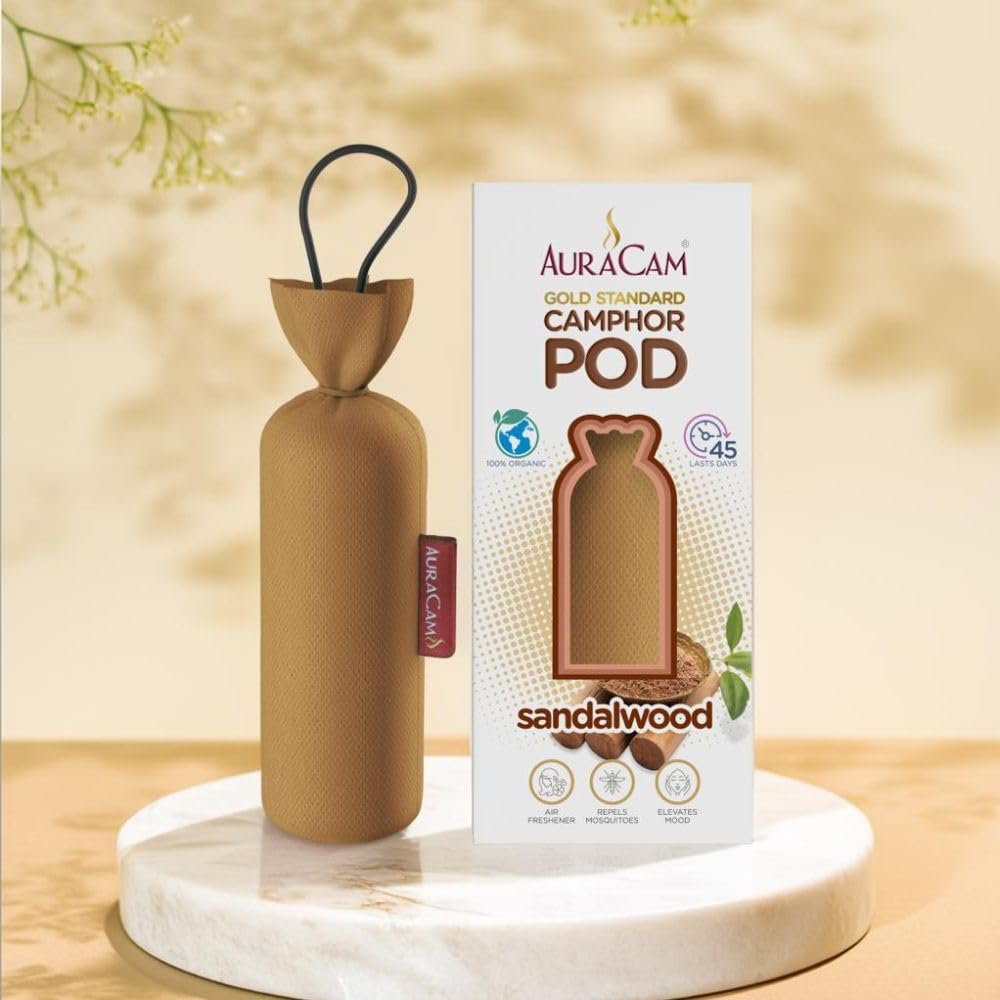
The purified camphor is then pressed or molded into its final form – tablets, cones, pods, or powder – depending on the intended use. It’s packaged in moisture-resistant packaging, since camphor sublimates (turns from solid directly to gas) at room temperature and will slowly evaporate if left exposed to air.
How to Tell If Your Camphor Was Made This Way
Since the manufacturing process isn’t visible to the buyer, here’s what to check on the product itself:
What to check | Genuine Bhimseni camphor | Synthetic/adulterated camphor |
Color | Bright white, slightly translucent | Dull white or yellowish |
Burn residue | Little to no soot | Leaves black soot or residue |
Smell | Natural, slightly sharp, camphor-only scent | Chemical or synthetic undertone |
Texture | Fine, dry crystals | Waxy or greasy feel (paraffin sign) |
Labeling | Discloses source and purity | Vague “camphor tablets” with no origin info |
Why the Manufacturing Process Matters for Pooja and Aromatherapy
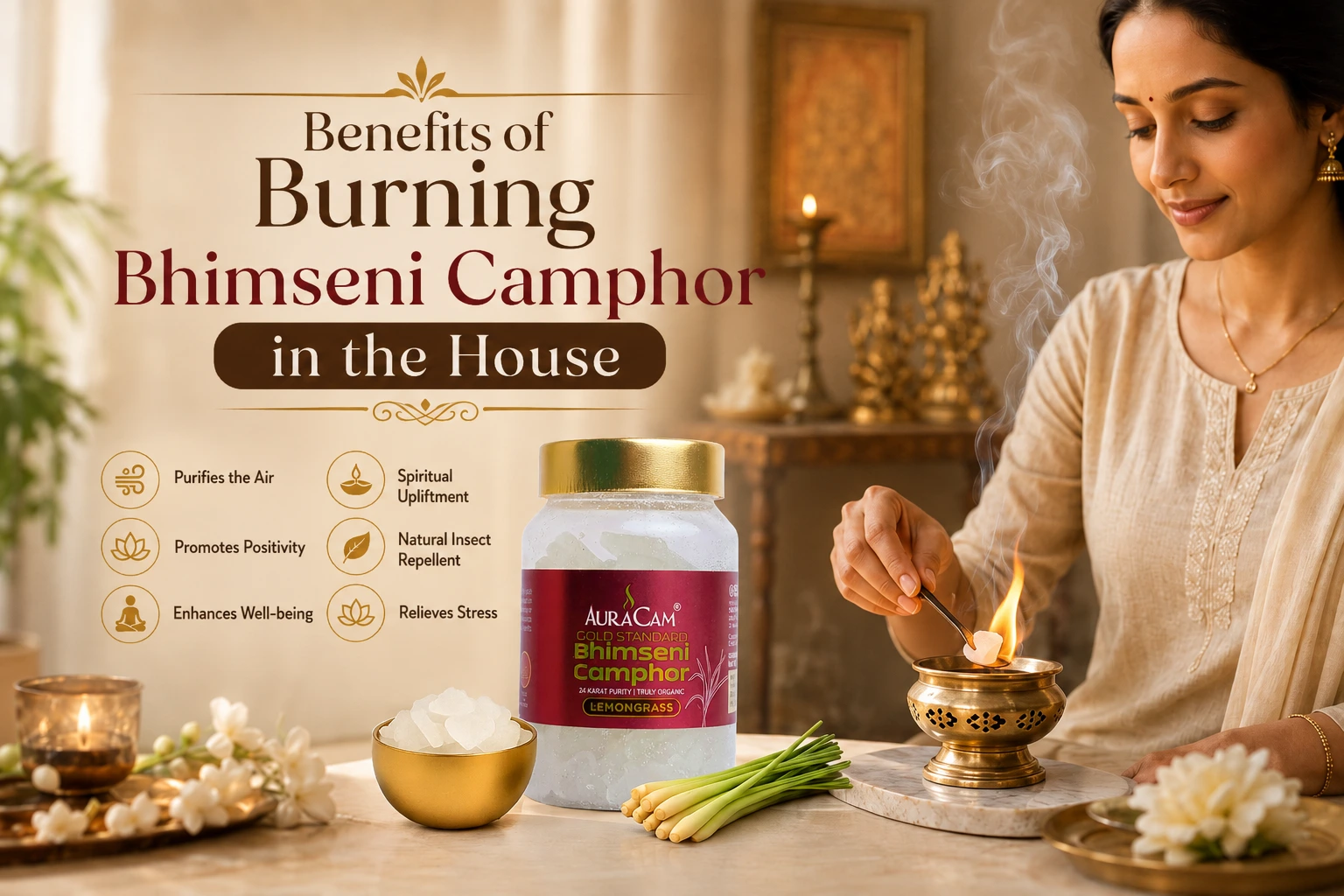
In religious use, camphor is meant to burn completely and cleanly, leaving no residue – symbolically representing the burning away of the ego with nothing left behind. Synthetic or paraffin-blended camphor often leaves soot and a chemical smell, which defeats this purpose and can also irritate the eyes and throat in enclosed pooja rooms.
For aromatherapy and home freshening, purity affects the actual experience – natural camphor’s aroma is what’s associated with mental clarity and a calming effect, while synthetic variants can smell harsher and less pleasant over time.
FAQs
Is Bhimseni camphor natural or chemically made?
Bhimseni camphor is naturally extracted through steam distillation from camphor-yielding trees. It is not synthesized in a lab, unlike most standard camphor tablets sold generically in the market.
What’s the difference between Bhimseni camphor and regular camphor?
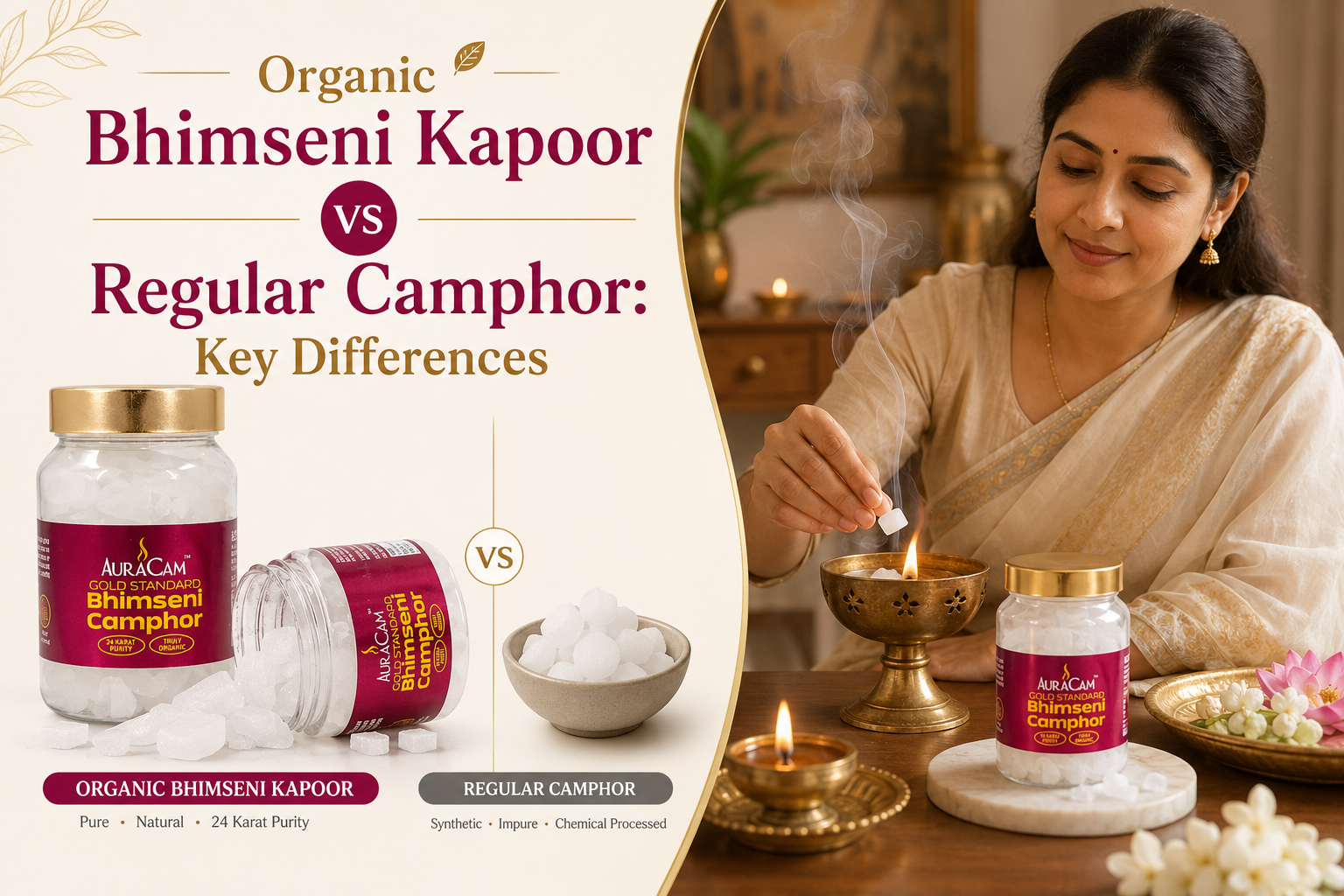
Bhimseni camphor is made purely through natural extraction and purification, while regular/synthetic camphor is manufactured chemically from turpentine oil, often with added paraffin.
Why does Bhimseni camphor burn without leaving residue?
Because it’s a purer form of natural camphor with minimal impurities, it sublimates (burns off completely) rather than leaving behind soot, wax, or a chemical film.
Is Bhimseni camphor safe for daily pooja use indoors?
Yes, when burned in small quantities with adequate ventilation, natural camphor is considered safe for daily ritual use. Avoid inhaling smoke directly or using it in completely sealed spaces.
How can I check if camphor is pure before buying it?
Look for bright white, dry crystals with a clean camphor smell and no waxy or greasy texture. Genuine camphor burns with little to no soot and leaves almost no residue. Vague packaging with no source or purity information is a red flag.
Why does camphor disappear even if I don’t burn it?
Camphor sublimates, meaning it turns directly from a solid into a gas at room temperature. This is normal for natural camphor and is why it should always be stored in airtight, moisture-resistant packaging like AuraCam’s sealed pouches and tablets.
Is AuraCam camphor 100% natural?
Yes. AuraCam Bhimseni Camphor is naturally extracted through steam distillation and purified without paraffin wax or synthetic additives, then tested in a dedicated quality control lab before packaging.
What is the shelf life of Bhimseni camphor?
When stored in a sealed, airtight container away from heat and direct sunlight, Bhimseni camphor can retain its potency for 1–2 years. Once opened, use it within a few months for the best fragrance and burn quality, as it will slowly sublimate over time.
Does AuraCam use paraffin or wax fillers in its camphor?
No. AuraCam’s camphor is made purely from naturally extracted crystals with no paraffin wax or synthetic bulking agents, which are common cost-cutting additives in cheaper, unbranded camphor.
Where does AuraCam source its camphor from?
AuraCam camphor is manufactured by SVD PineChem, part of the Dujodwala Group, using a sourcing network built over more than 60 years in India’s pine chemicals industry.
Experience the AuraCam Difference
AuraCam Bhimseni Camphor is made using this exact traditional extraction and purification process, backed by a manufacturing heritage of over 60 years in the pine chemicals industry as part of the Dujodwala Group. No paraffin, no synthetic additives – just pure, naturally extracted camphor tested for purity before it reaches you.