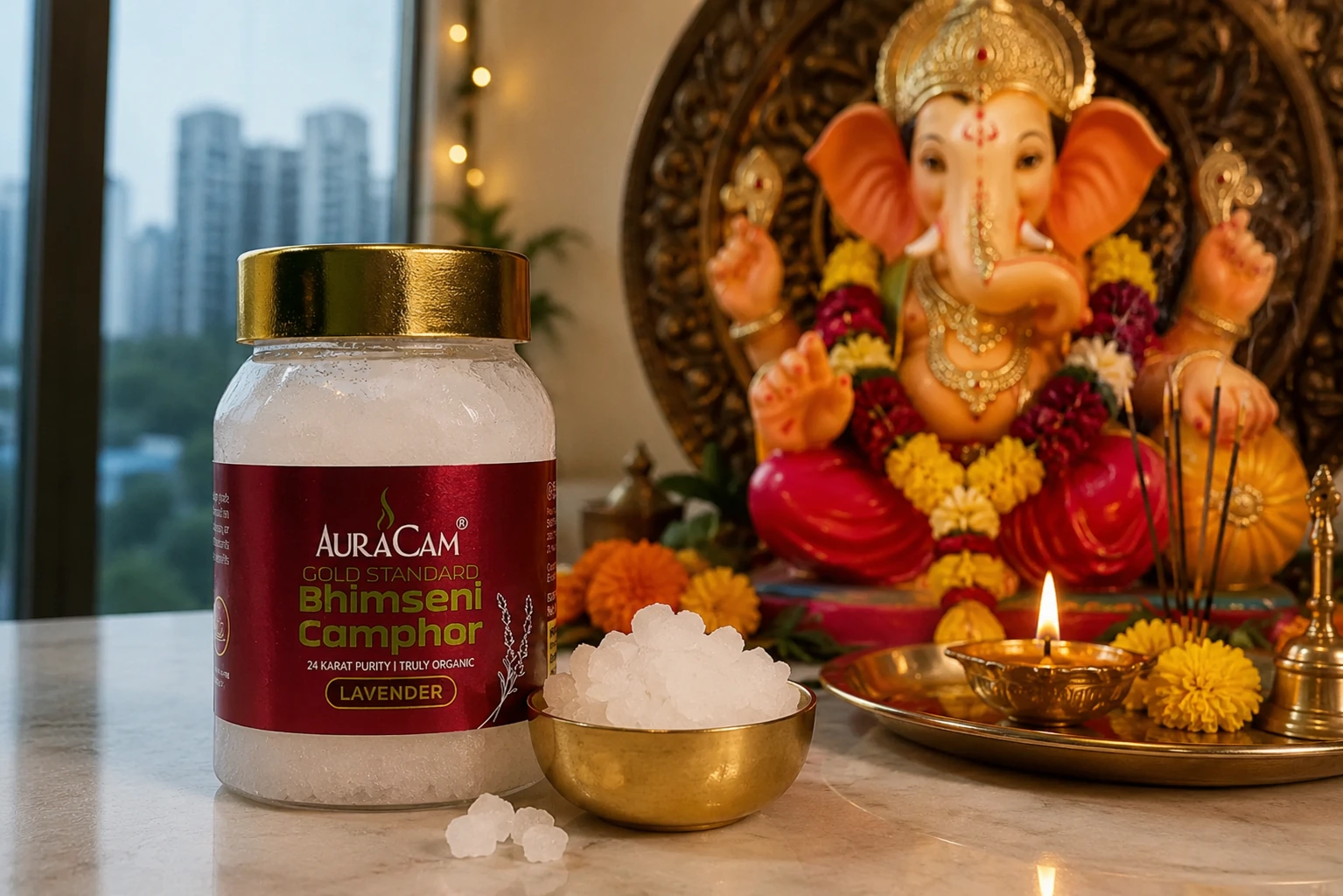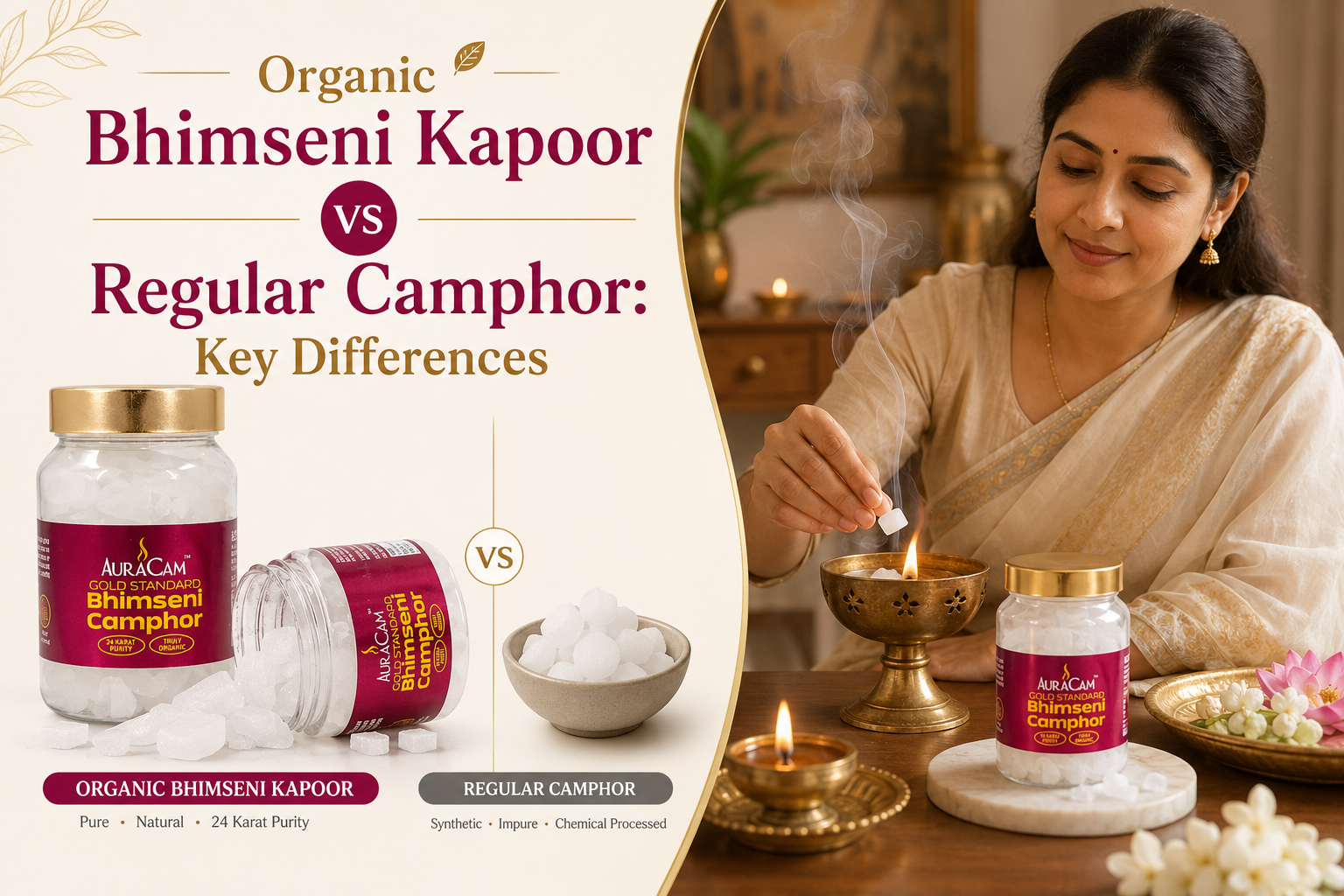
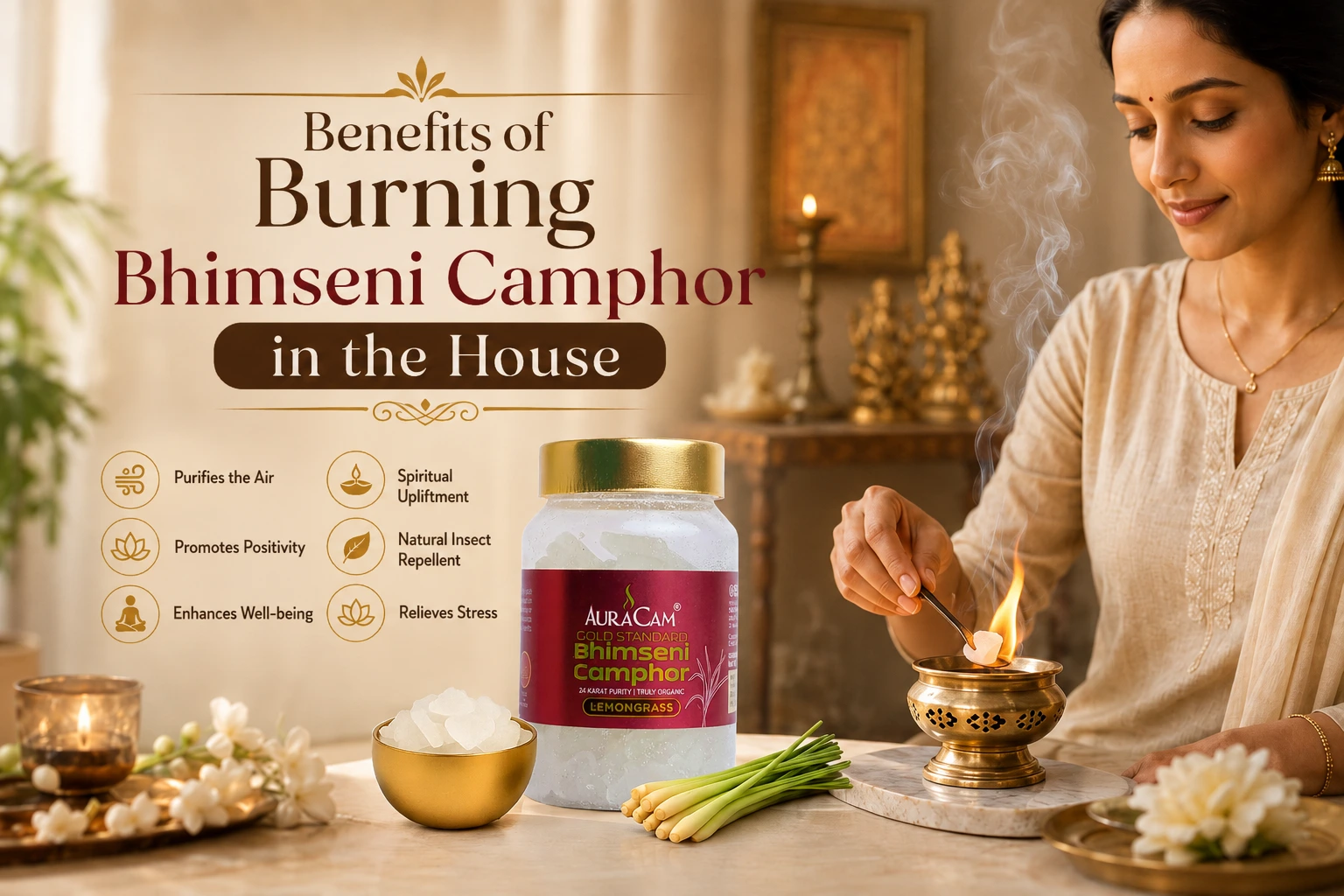
Walk into almost any Indian home during the evening aarti, and you’ll notice the same small ritual repeated across balconies, kitchens, and puja rooms: a camphor flame flickering in a diya, filling the air with a crisp, cooling fragrance. This isn’t just tradition for tradition’s sake. Bhimseni camphor – the naturally derived, edible-grade camphor sourced from the Cinnamomum camphora tree – is at the centre of a genuine resurgence in India’s spiritual and wellness routines.
In 2026, as urban and semi-urban Indian households increasingly seek products that are authentic, chemical-free, and rooted in Ayurvedic wisdom, natural camphor has moved from a once-a-week temple item to a daily household essential. If you’re looking to buy pure, temple-grade Bhimseni camphor for your home or business, understanding exactly why this small white crystal matters can help you make a more informed, and more spiritually meaningful, choice.
This guide covers everything you need to know – the science, the tradition, the pricing, and how to identify genuine Bhimseni camphor in a market crowded with synthetic look-alikes.
Why is natural Bhimseni camphor important in India in 2026?
Bhimseni camphor holds a unique place in Indian households because it is both spiritually significant and functionally useful. Unlike synthetic camphor, which is derived from turpentine oil through chemical processing, Bhimseni camphor is extracted directly from camphor tree bark and wood without any additives.
India’s religious and spiritual products market was valued at roughly ₹5.3 lakh crore (USD 64.4 billion) in 2025 and is projected to nearly triple by 2035, growing at a compound annual rate of around 10% a year. Camphor remains one of the core ritual items driving this demand, alongside incense and pooja oils.
Bhimseni camphor is also gaining traction beyond religious use. According to industry estimates, India’s camphor segment shows roughly 62% ritual usage and around 24% household air-care usage, with moisture-resistant, sealed packaging now accounting for the majority of branded sales – a clear sign that Indian consumers increasingly want camphor that is pure, long-lasting, and safely packaged rather than loose, adulterated variants sold in unmarked pouches.
What are the key benefits of burning Bhimseni camphor at home?
Bhimseni camphor offers a combination of spiritual, aromatic, and practical household benefits that make it worth burning daily, not just during festivals.
How does Bhimseni camphor purify indoor air?
Bhimseni camphor releases natural aromatic compounds when burned, which many Ayurvedic practitioners believe help freshen stagnant indoor air, especially in tightly sealed apartments common in cities like Mumbai, Bengaluru, and Pune. The smoke is light and dissipates quickly, unlike synthetic camphor, which often leaves behind a heavier, sooty residue.
At Auracam, we craft our camphor from 100% natural camphor tree extract, so the burn is cleaner and free from the black soot and sharp chemical odour typically associated with synthetic tablets.
Does burning camphor have aromatherapy benefits?
Yes. The scent of natural camphor is widely used in aromatherapy for its cooling, calming effect on the mind. Many users report that lighting camphor before meditation or yoga helps create a more focused, tranquil atmosphere – one reason camphor diffusers and camphor cups have become popular additions to Indian home décor and wellness corners in 2026.
- Helps ease mild congestion when inhaled in small amounts
- Creates a calming ambience for meditation and pranayama
- Commonly paired with essential oil diffusers in urban wellness routines
Why do Hindu rituals rely on camphor instead of other flames?
In Hindu philosophy, camphor is unique because it burns completely, leaving behind no residue or ash. This is symbolically significant – it represents the burning away of the ego (ahamkara) during aarti, leaving nothing behind but light. This is one reason temples across India, from Tamil Nadu’s 79,000-plus temples to the shrines of North India, insist on pure, unadulterated camphor rather than cheaper synthetic substitutes that leave black residue on idols and temple walls.
Can Bhimseni camphor help repel insects naturally?
Bhimseni camphor has traditionally been placed in cupboards, grain stores, and prayer rooms to help keep insects and silverfish away, thanks to its strong natural aroma. Many households in semi-urban India still use small camphor tablets alongside neem leaves as a chemical-free pest deterrent for clothes and books.
How is Bhimseni camphor different from synthetic camphor?
This is one of the most searched questions among Indian consumers in 2026, as awareness around adulteration has grown.
Feature | Bhimseni (Natural) Camphor | Synthetic Camphor |
Source | Camphor tree bark/wood extract | Turpentine oil, chemically processed |
Burn residue | Minimal to none | Black soot, sticky residue |
Smell | Mild, natural, slightly sweet | Sharp, chemical-like |
Edibility | Safe in Ayurvedic/ritual use | Not recommended for ingestion |
Skin/eye safety | Gentler | Can cause irritation |
According to Auracam’s 2026 India market insights, the growing consumer preference for traceable, lab-tested ingredients is pushing more households and temple trusts to specifically request “Bhimseni” or “edible-grade” camphor by name, rather than accepting generic loose camphor from local vendors.
How does Auracam ensure premium quality camphor?
Auracam’s authentic Bhimseni camphor ensures every batch goes through strict quality checks before it reaches your home or temple. Sourcing matters enormously in this category, since India’s camphor demand – spanning pharmaceutical, industrial, and religious applications – has made the market attractive to low-cost adulterated suppliers.
Here’s what sets Auracam apart:
- Naturally derived crystals – no synthetic turpentine-based fillers
- Moisture-resistant, sealed packaging to preserve purity and aroma
- Batch traceability for temples, retailers, and bulk institutional buyers
- No added dyes or artificial whiteners
At Auracam, we craft each batch keeping in mind the two very different needs of the Indian market – households wanting a daily-use ritual product, and temples and retailers needing bulk consistency without compromising on purity.
What sizes and prices does Auracam offer in 2026?
Pricing for natural Bhimseni camphor in India varies depending on pack size, purity grade, and whether you’re buying retail or in bulk. Based on realistic 2026 Indian market rates for premium natural camphor, here’s what Indian consumers can typically expect:
- Small pouch (20g) – ideal for daily household aarti – approximately ₹60–₹90
- Standard pack (50g) – popular for regular home and small shrine use – approximately ₹140–₹180
- Family pack (100g) – for frequent rituals and larger households – approximately ₹260–₹320
- Temple/bulk pack (500g) – for temples, ashrams, and event organisers – approximately ₹1,200–₹1,500
- Wholesale/retailer cartons (5kg+) – custom pricing for premium retailers, typically ₹11,000–₹13,500 per 5kg, with further discounts on larger recurring orders
Auracam offers tiered pricing for temples and premium retailers who need consistent monthly supply, along with custom packaging options for gifting during festivals like Diwali, Navratri, and Karthigai Deepam.
What trends are shaping camphor use in Indian households in 2026?
Indian consumer behaviour around ritual products has shifted noticeably in the last few years, and Bhimseni camphor sits right at the intersection of two major movements.
Why are urban Indians returning to traditional rituals?
Urban professionals in metros are increasingly incorporating short daily rituals – a two-minute aarti, a lit diya at the workstation, or a camphor cup during evening prayers – as a way to create calm amid demanding schedules. Wellness surveys consistently show rising interest in mindfulness practices among India’s expanding middle class, and camphor-based rituals fit naturally into this trend because they require minimal time and no special equipment.
How is eco-conscious sourcing influencing camphor buying decisions?
Eco-friendly and sustainably sourced products are no longer a niche preference in India; they are becoming a baseline expectation, particularly among consumers under 40. Camphor sourced from responsibly managed camphor tree plantations, free from synthetic additives, appeals directly to this demand. Auracam’s authentic Bhimseni camphor ensures customers aren’t compromising between tradition and sustainability – both are built into the sourcing process from the start.
Is e-commerce changing how Indians buy camphor?
Yes, significantly. Online platforms have made it far easier for households outside metro cities to access premium, lab-verified camphor rather than relying solely on local shops where adulteration is harder to detect. This shift has also helped smaller premium brands reach temple trusts and event organisers directly, cutting out inconsistent middlemen supply chains.
How should you store and use Bhimseni camphor safely at home?
- Store camphor in an airtight container away from direct sunlight and moisture
- Keep it out of reach of children and pets, as it is not meant for casual ingestion outside Ayurvedic guidance
- Burn it in a well-ventilated room or near an open window
- Use a heat-safe diya, camphor stand, or metal plate – never burn it directly on flammable surfaces
- Avoid prolonged inhalation of concentrated smoke in small, closed spaces
People Also Ask: Quick Answers About Bhimseni Camphor
Is Bhimseni camphor safe to burn daily at home?
Yes, when used in small, appropriate quantities in a ventilated space, natural Bhimseni camphor is considered safe for daily ritual use in most Indian households.
What is the difference between Bhimseni camphor and regular pooja camphor tablets?
Bhimseni camphor is naturally extracted and edible-grade, while many regular pooja tablets sold loosely in the market are synthetic, made from processed turpentine oil.
Can Bhimseni camphor be used for skincare or Ayurvedic remedies?
Natural camphor is used in some traditional Ayurvedic formulations for external application, but it should only be used under guidance and never in concentrated or undiluted form.
How can I identify authentic Bhimseni camphor?
Genuine Bhimseni camphor is typically off-white or slightly translucent, has a mild natural aroma rather than a sharp chemical smell, and burns without leaving thick black soot.
Why do temples specifically prefer Bhimseni camphor over synthetic options? Temples prefer it because it burns cleanly without residue, aligns with the spiritual symbolism of complete surrender, and doesn’t stain idols, brassware, or temple walls the way synthetic camphor can.
Bringing Authentic Tradition Back Into Your Home
Burning Bhimseni camphor is more than a ritual – it’s a small, daily act that connects Indian households to centuries of Ayurvedic and spiritual wisdom, while offering genuine aromatherapy and air-freshening benefits along the way. As more Indian consumers in 2026 seek products that are natural, traceable, and free from synthetic shortcuts, the demand for authentic camphor is only growing.
Auracam remains committed to bringing that authenticity directly to Indian homes, temples, and premium retailers, one carefully sourced batch at a time. Whether you need a small pouch for your daily aarti or a bulk order for your temple or store, choosing genuine Bhimseni camphor ensures every flame you light carries the purity your rituals deserve.